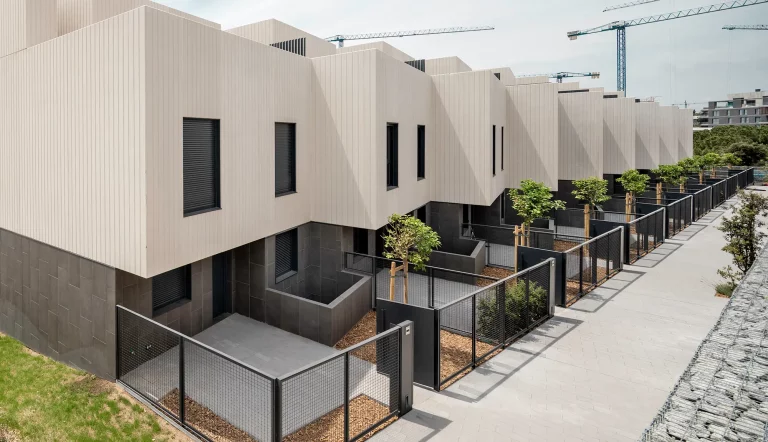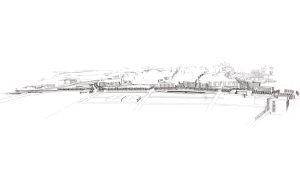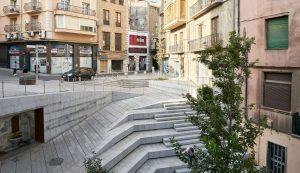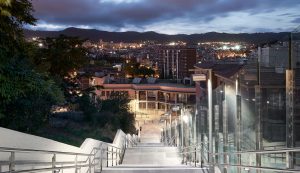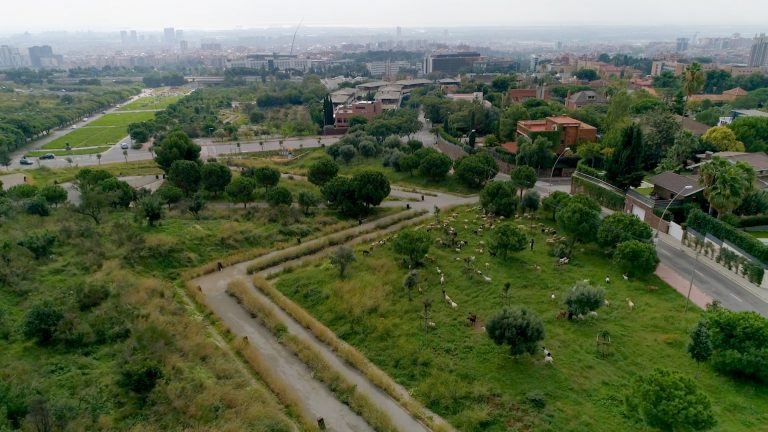
Finestrelles Detailed Master Plan in Esplugues de Llobregat
The urban planning completes the growth of Esplugues de Llobregat and configures a new green gate that connects the city and the Collserola Natural Park.
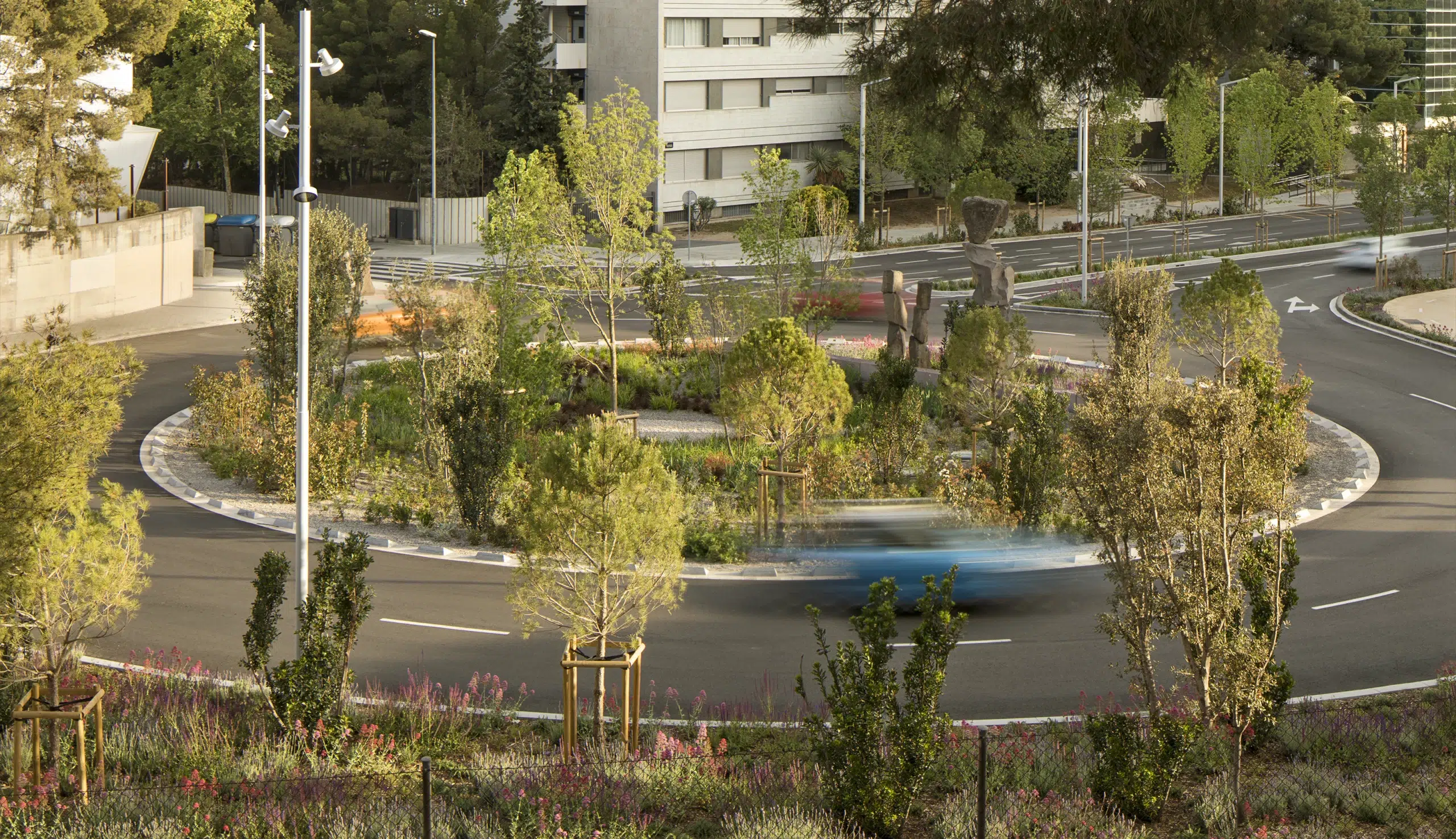
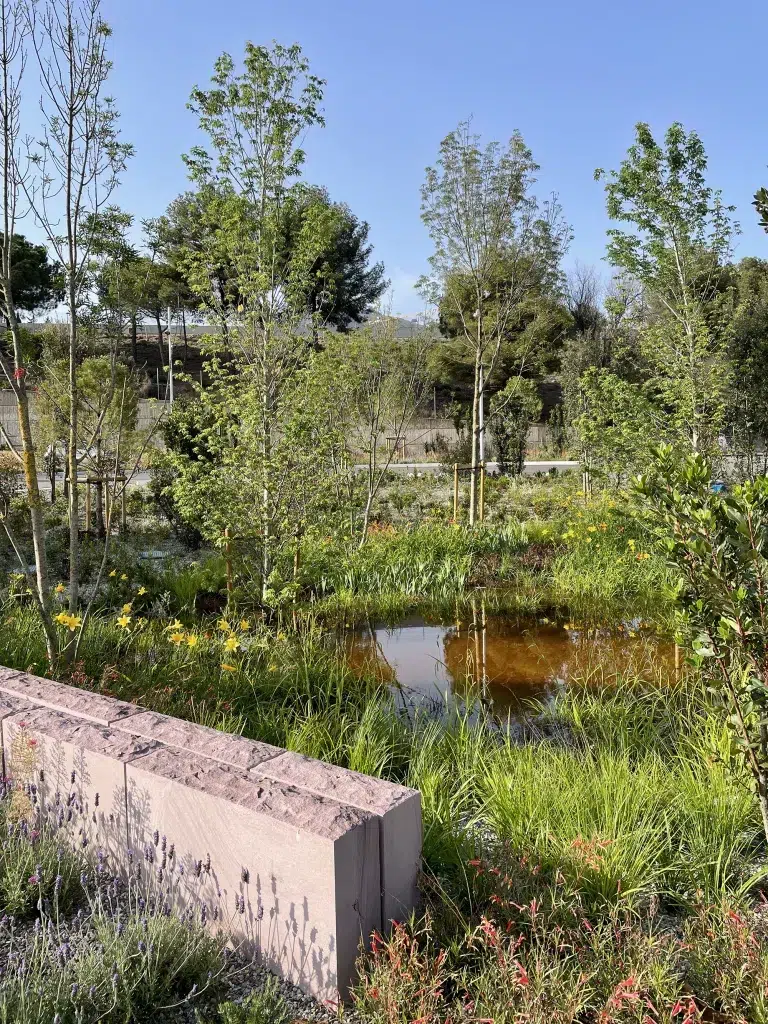
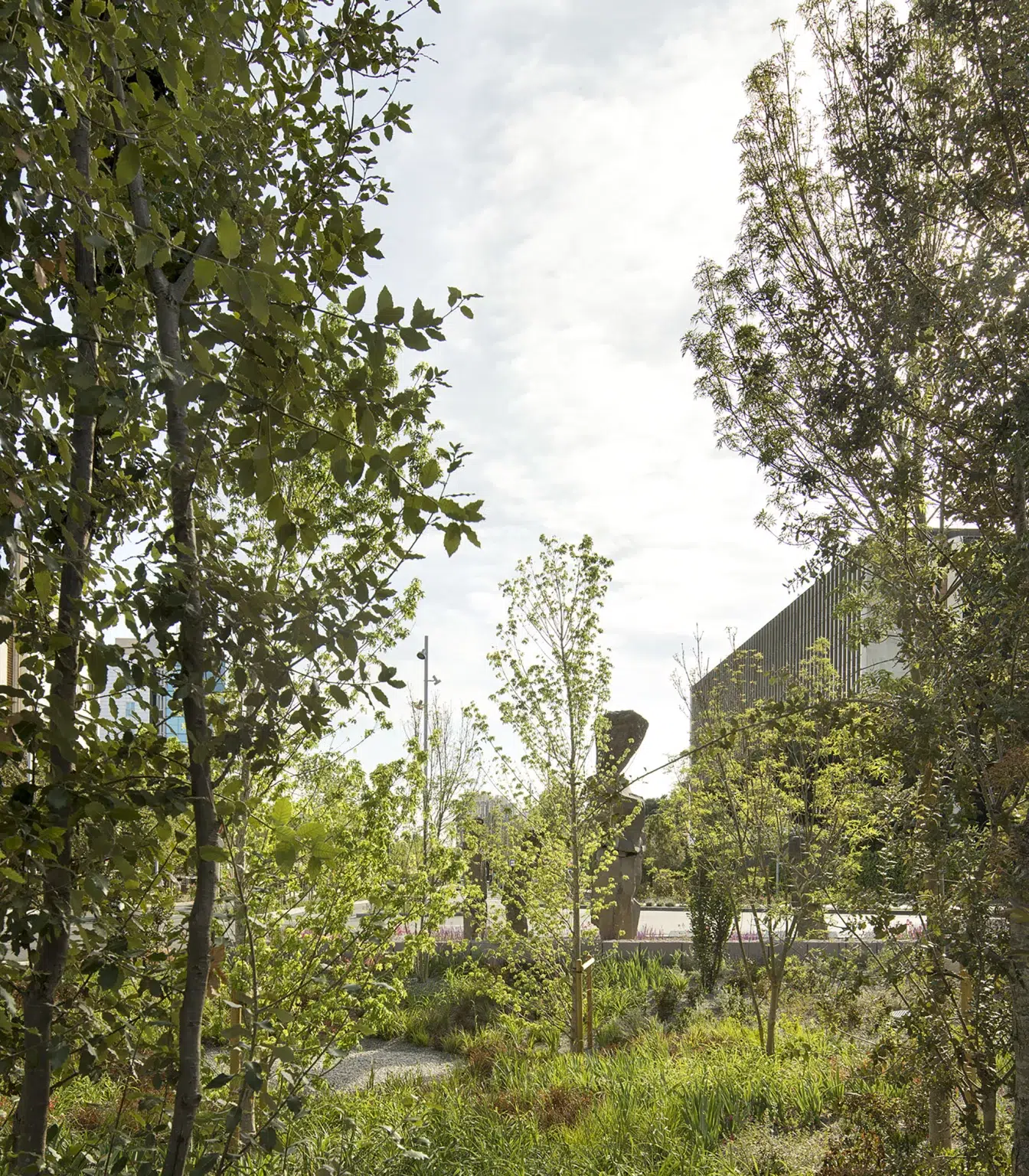
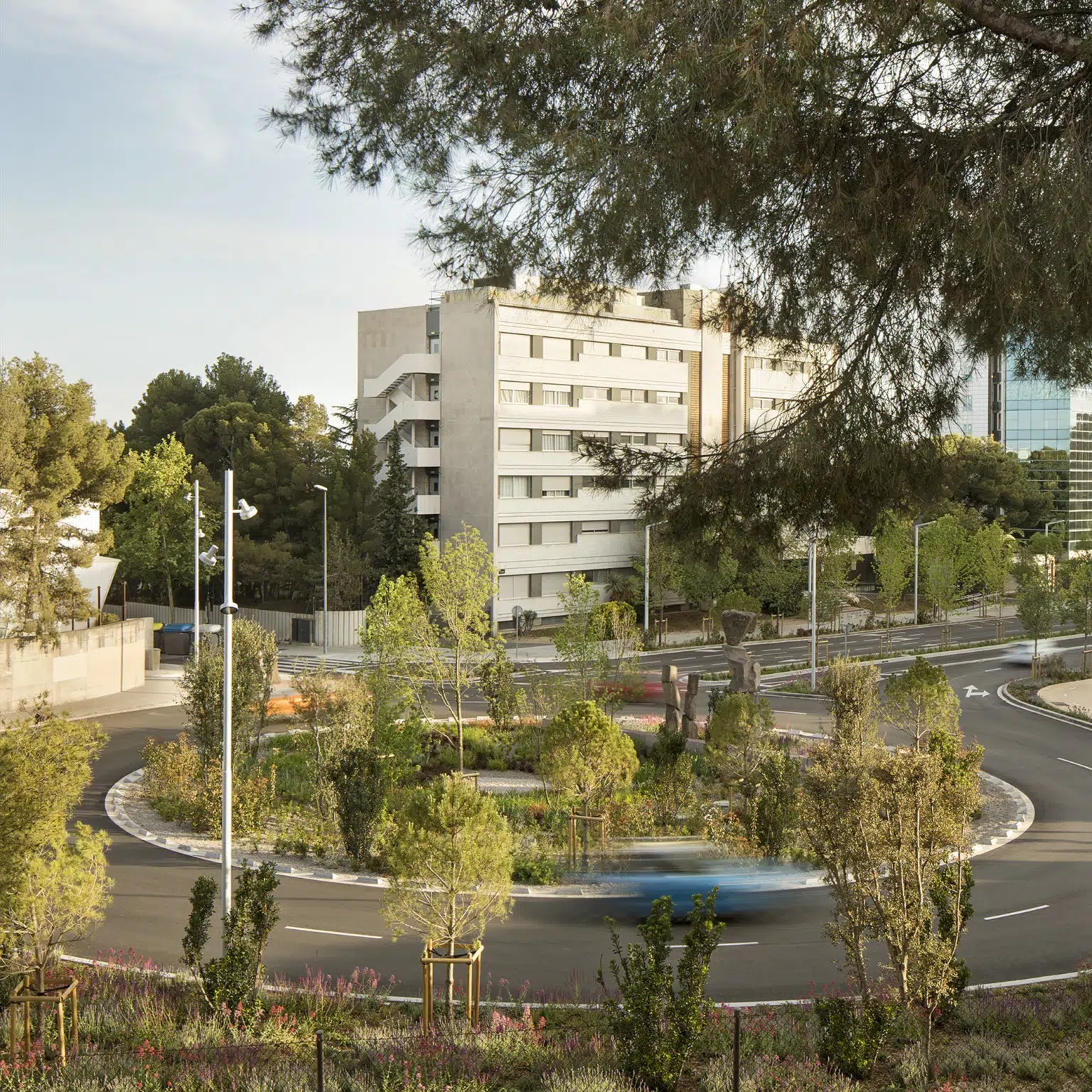
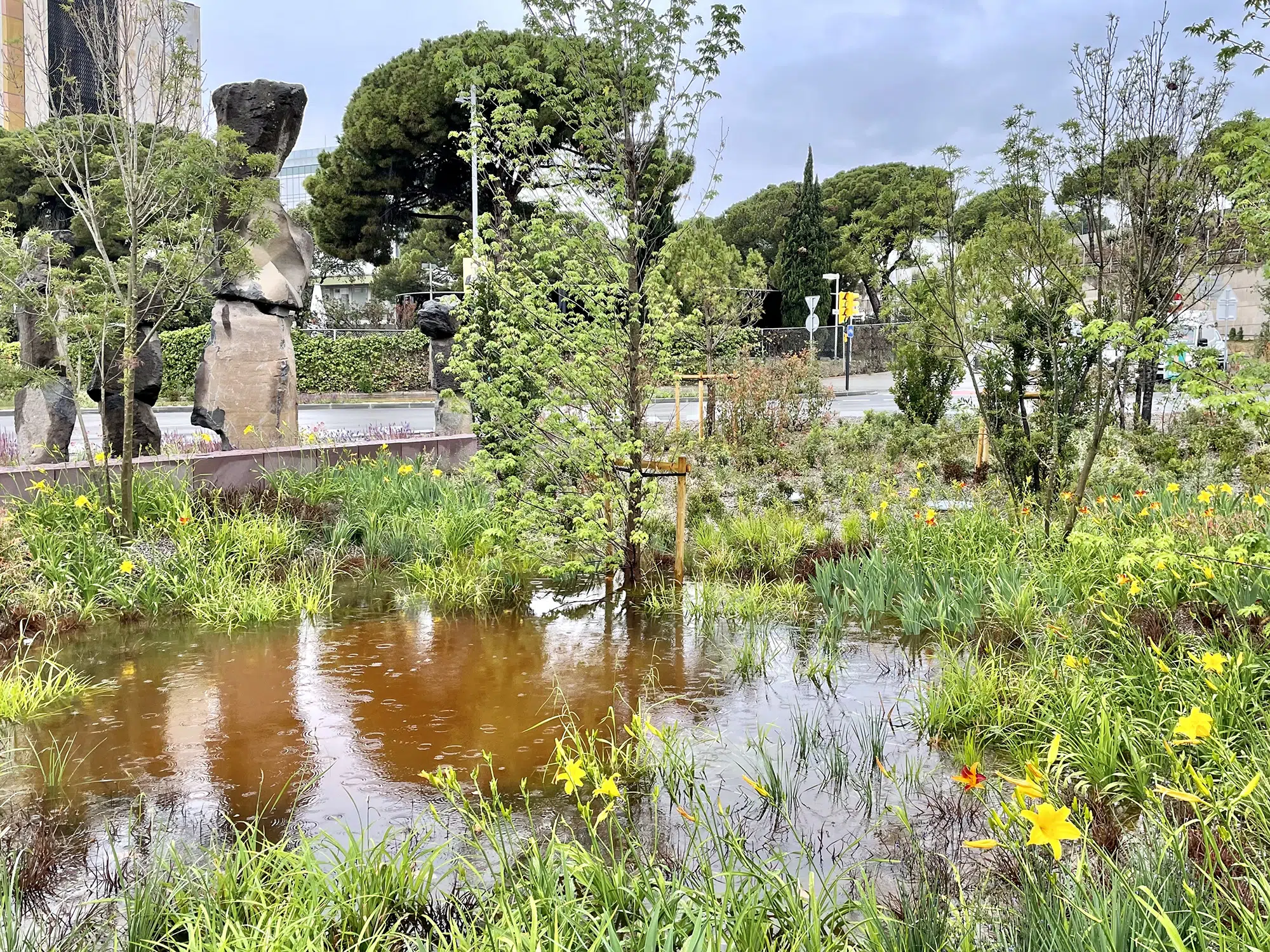
The Elisabeth Eidenbenz roundabout and the Països Catalans Avenue in Esplugues de Llobregat have undergone a transformation to address evolving social and environmental needs. This renewal has introduced a more resilient and eco-conscious urban design, maximizing the efficient use of natural resources and vegetation, with water taking center stage.
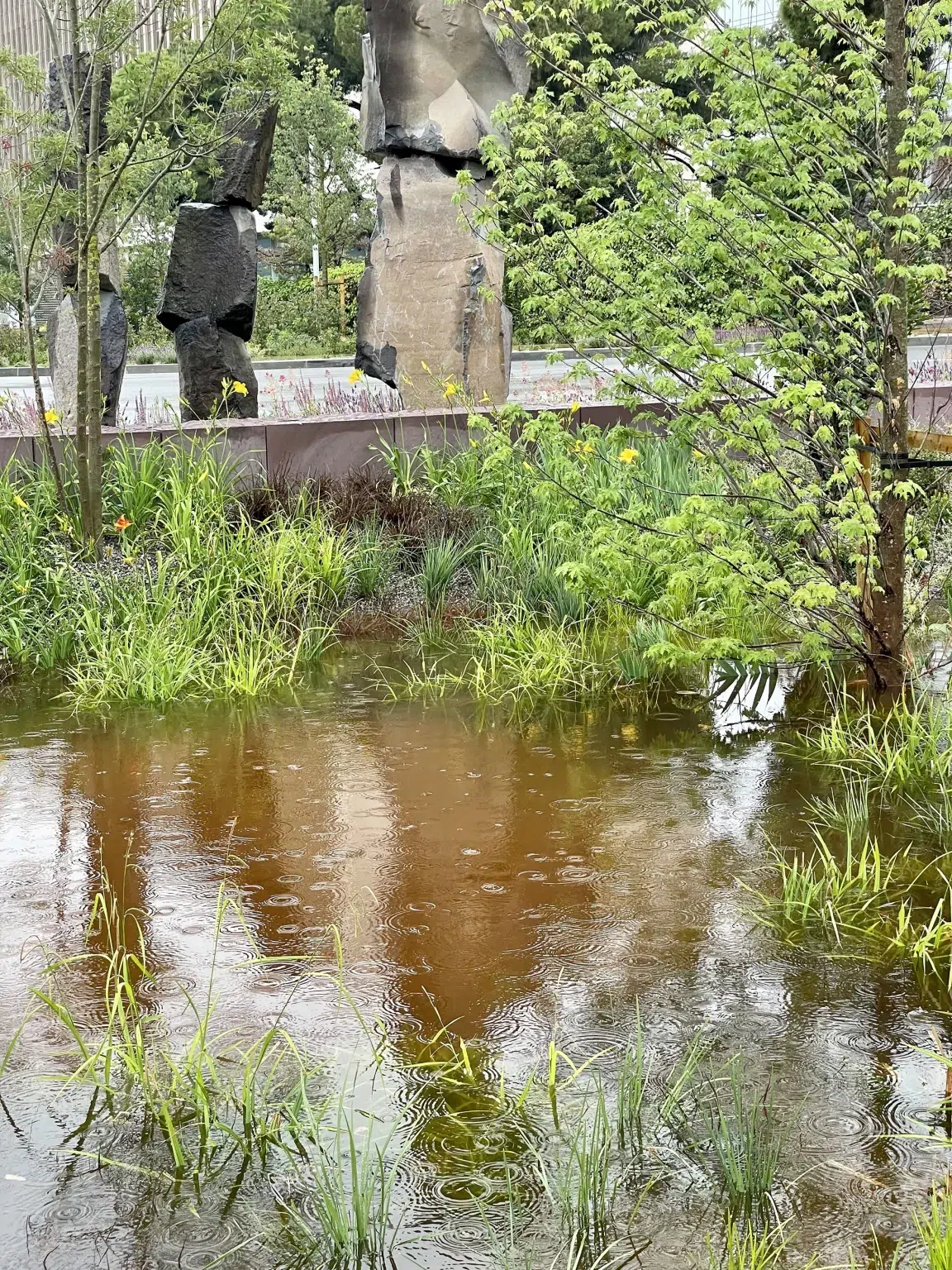
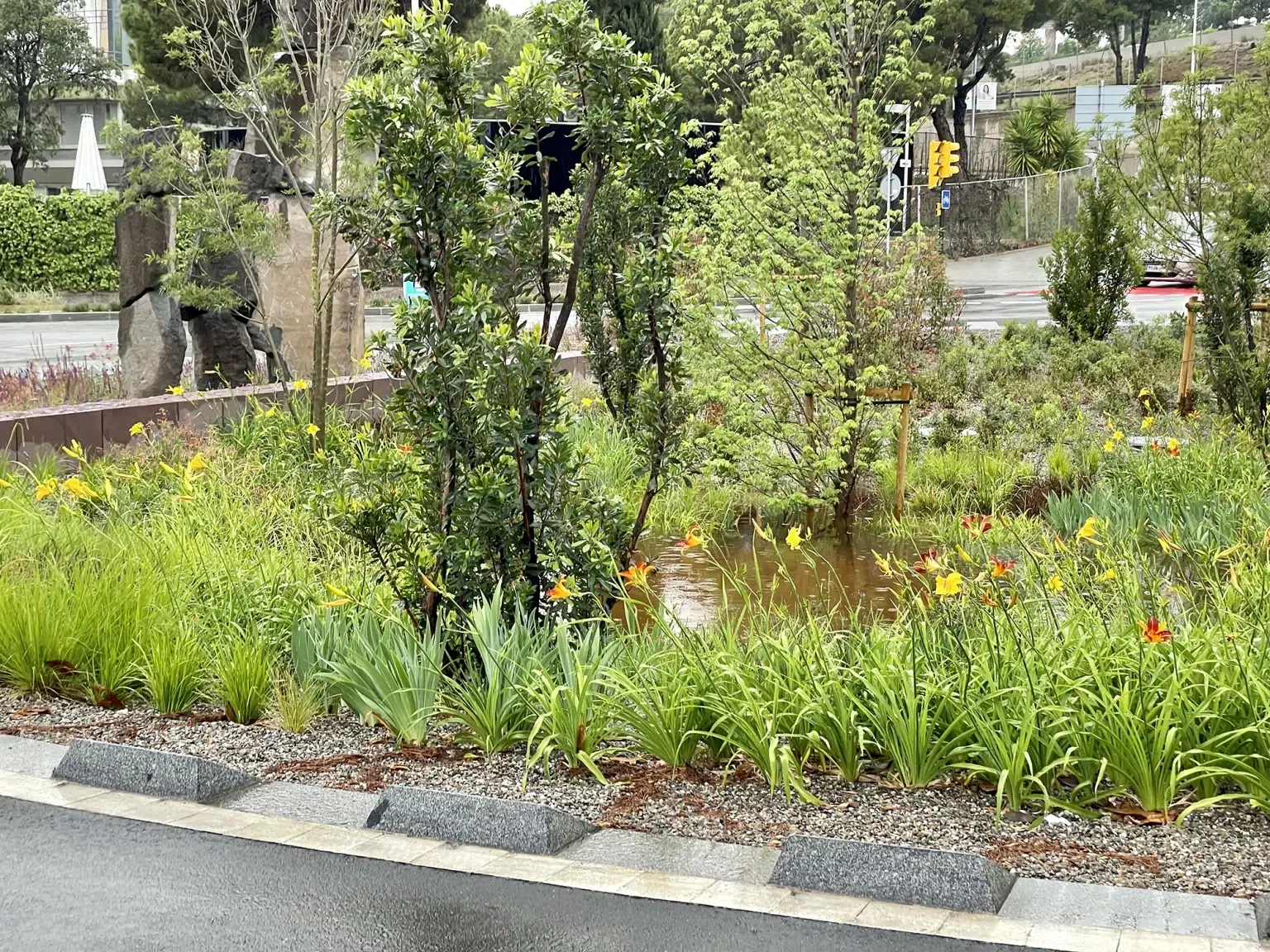
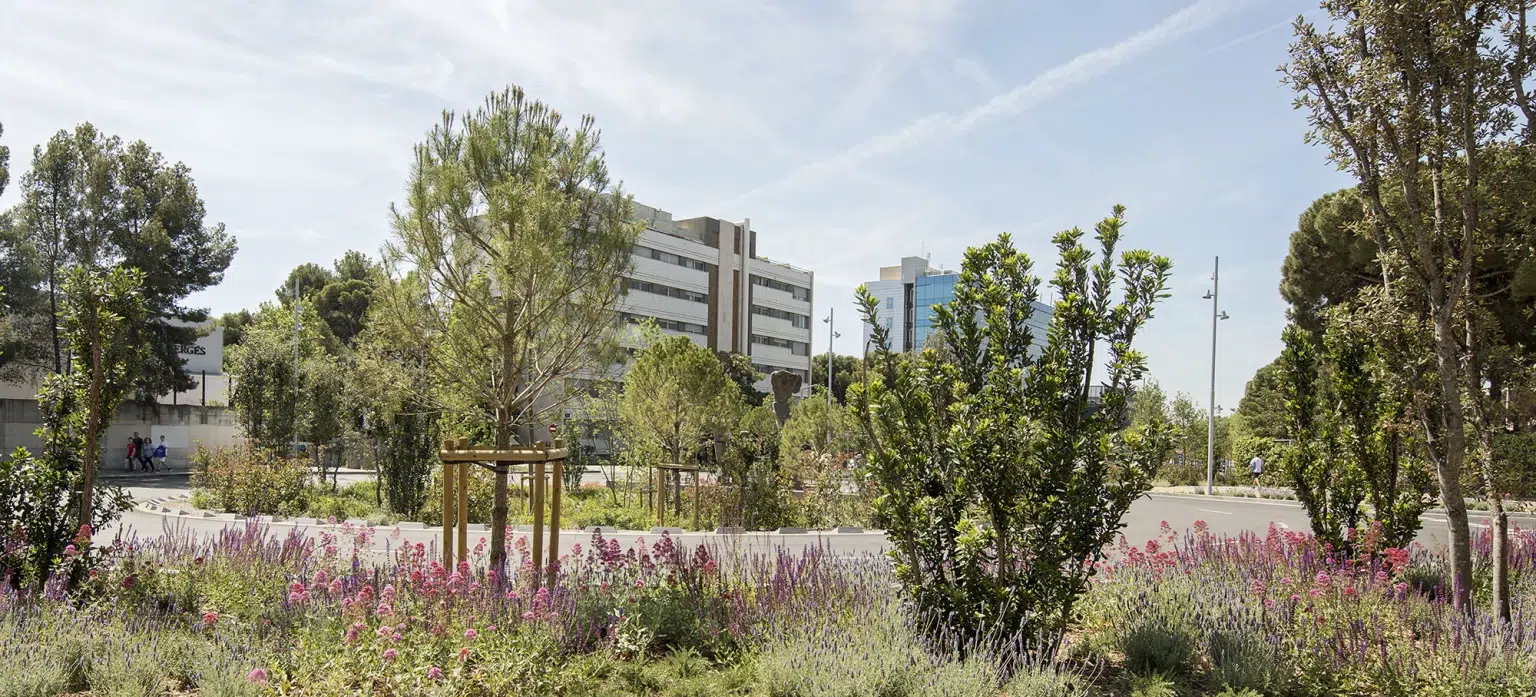
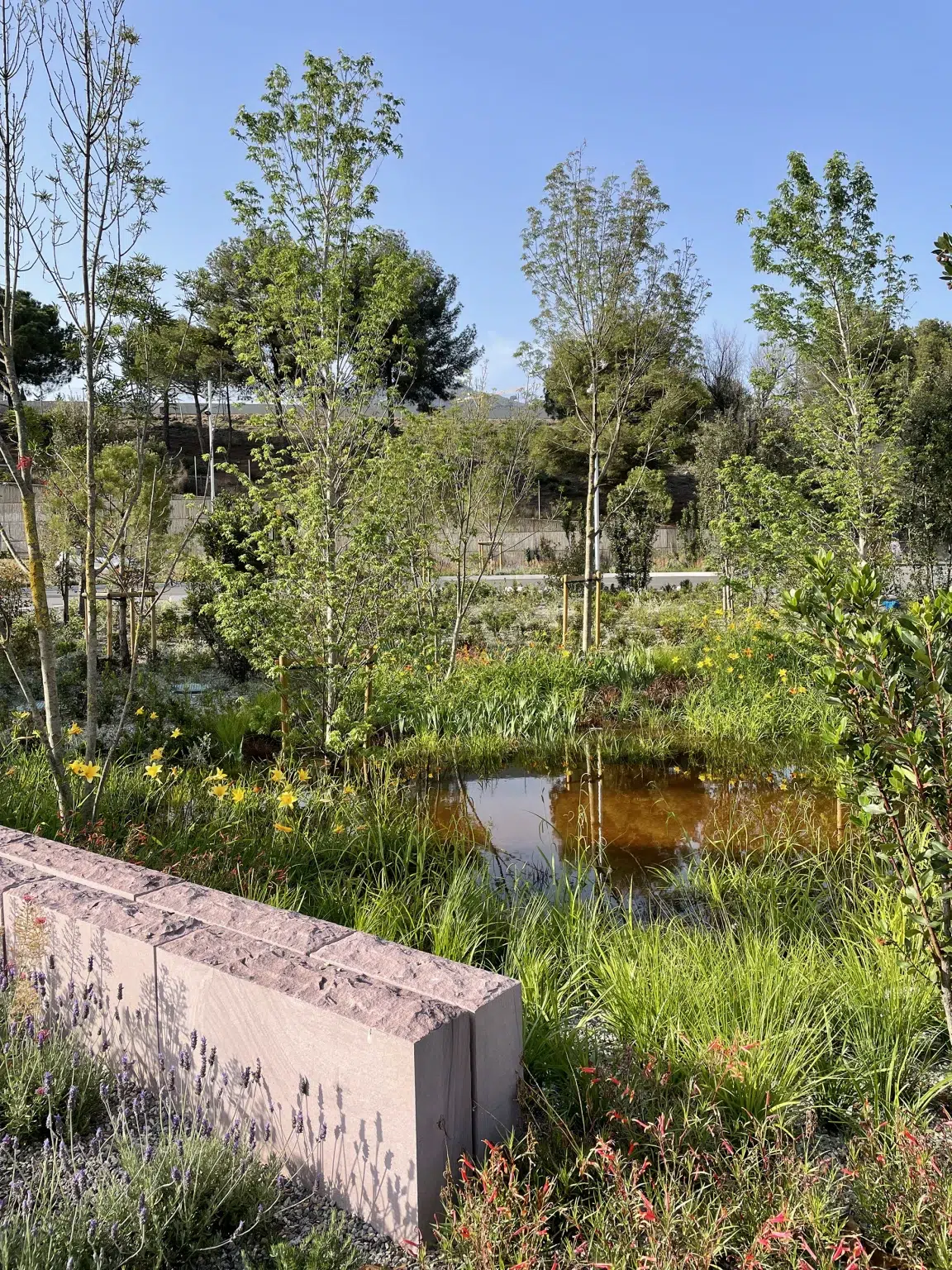
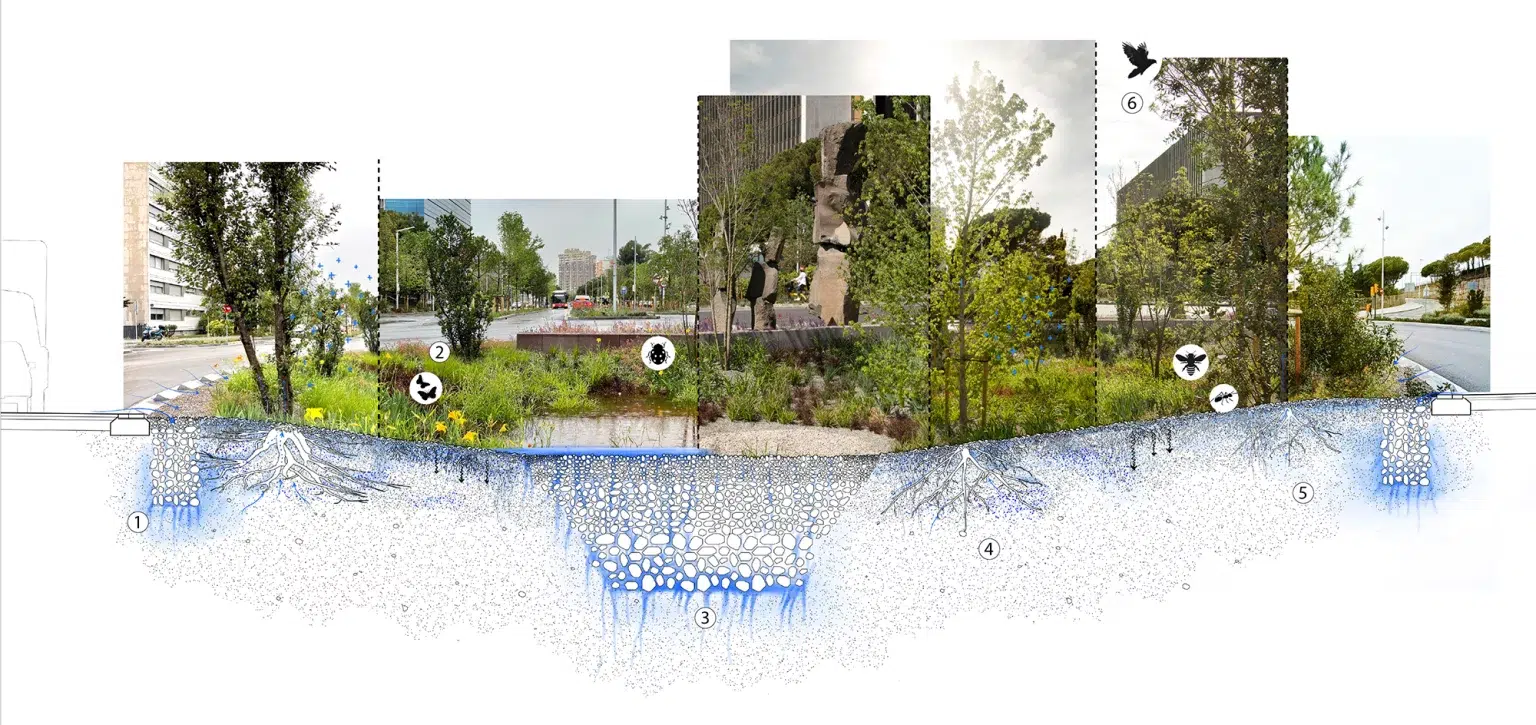
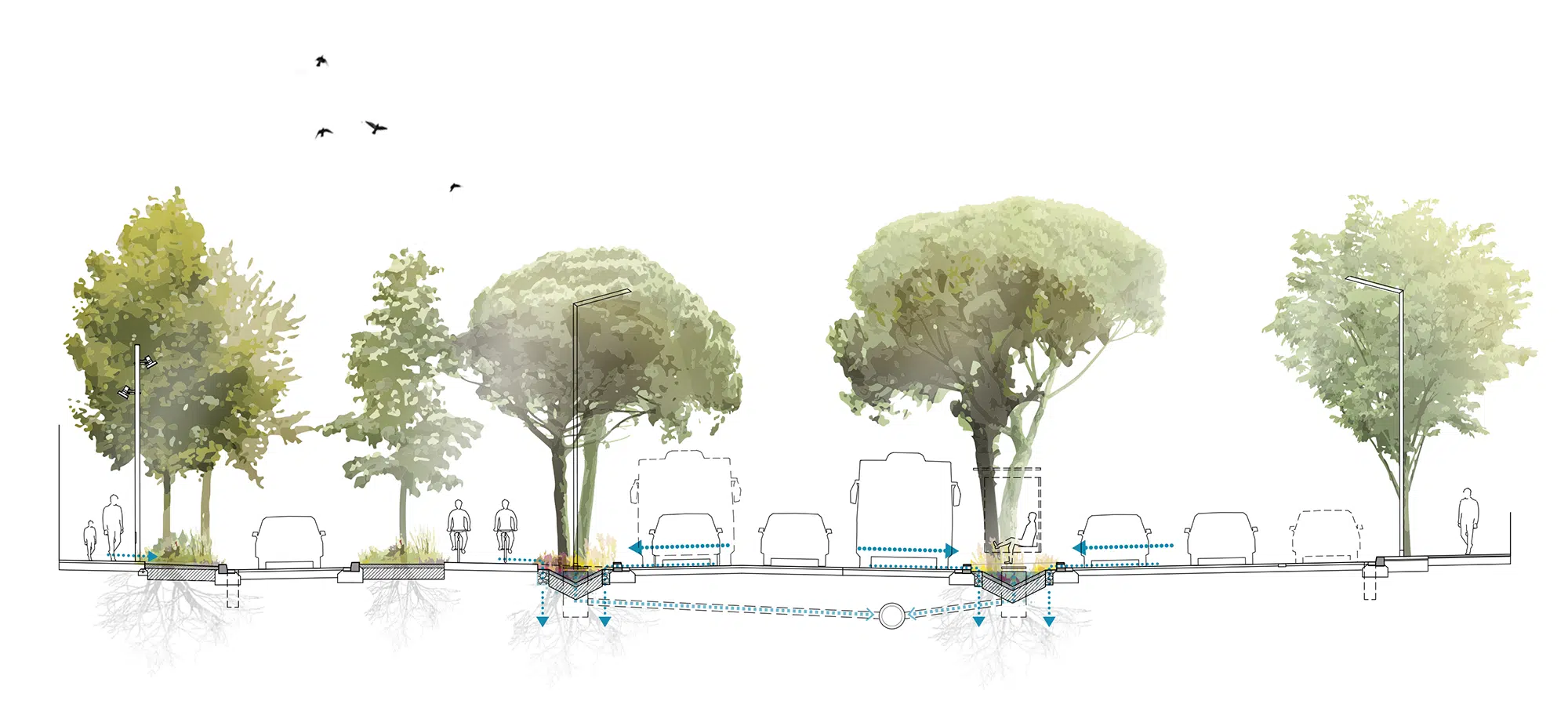
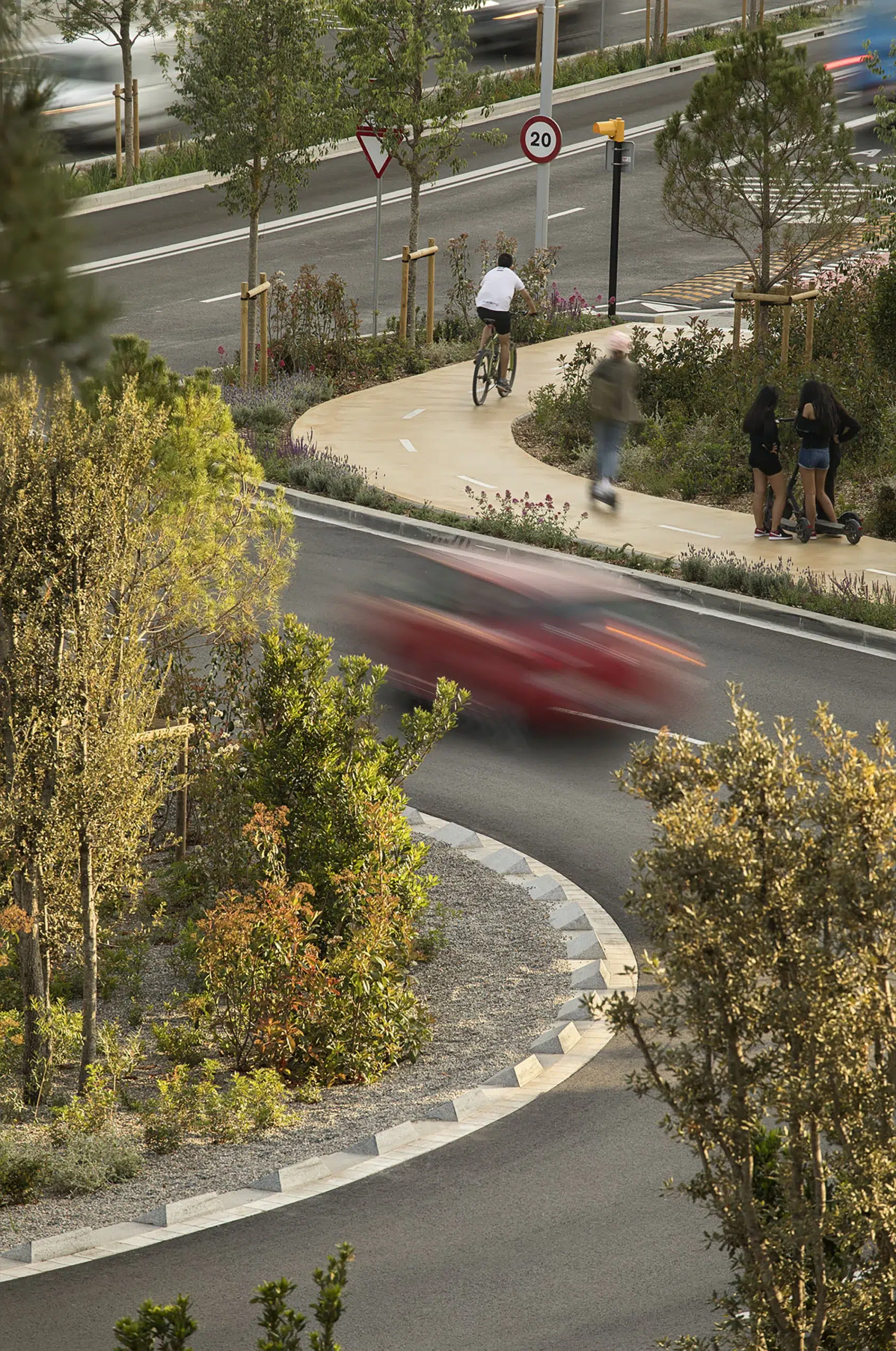
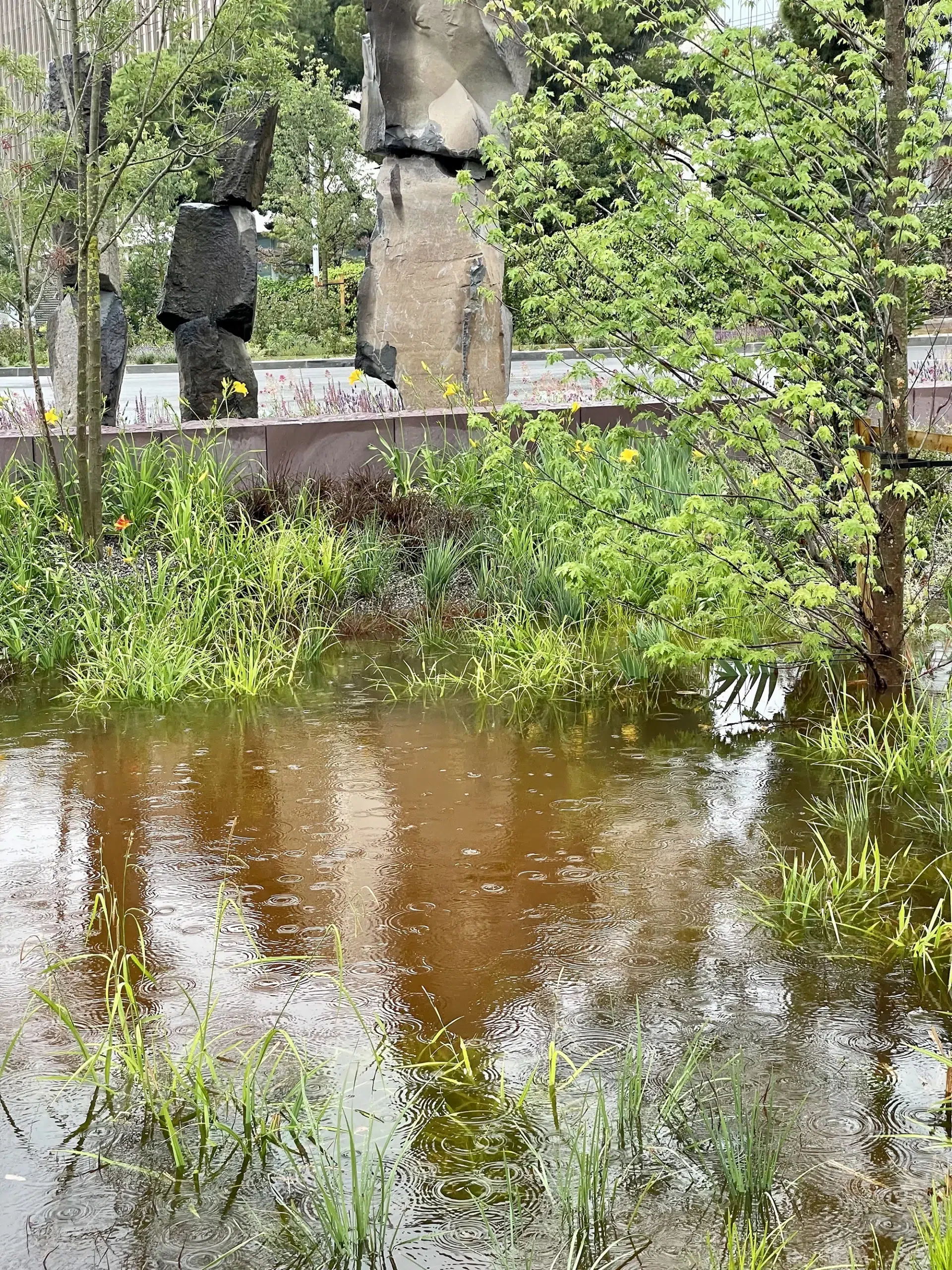
The transformation of the Elisabeth Eidenbenz roundabout and the Avinguda dels Països Catalans has been carried out with the aim of turning this area into an inclusive and environmentally friendly public space. The project led to the design of an impluvium at the center of the roundabout, created to meet the site’s requirements and the current needs of the city. The depression in the center of the roundabout, along with the recovery of soil permeability, facilitates the filtration, retention, regulation, and infiltration of rainwater.
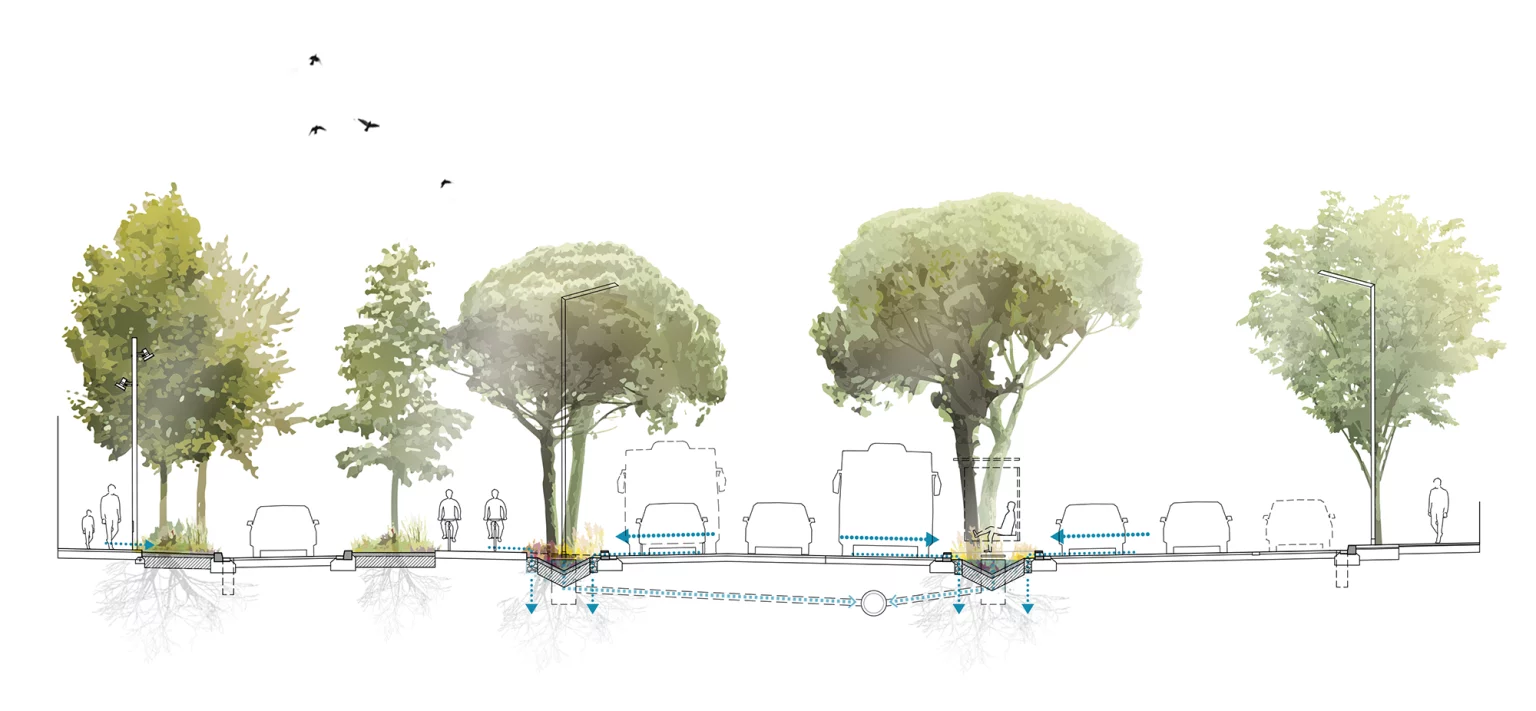
The sidewalk surrounding the roundabout has been specially designed to allow water to flow inward without compromising road safety. A perimeter channel controls erosion and enhances water infiltration.
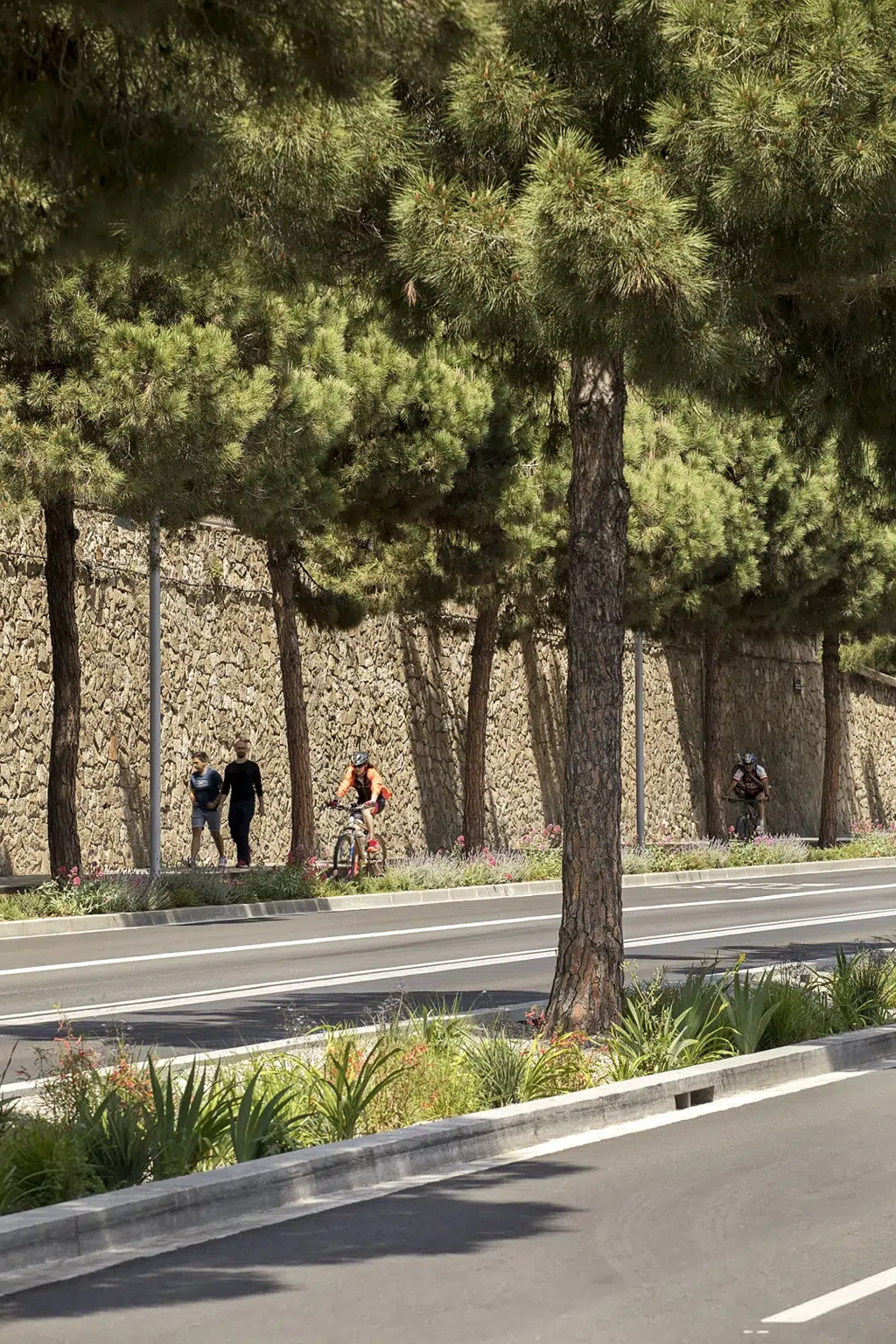
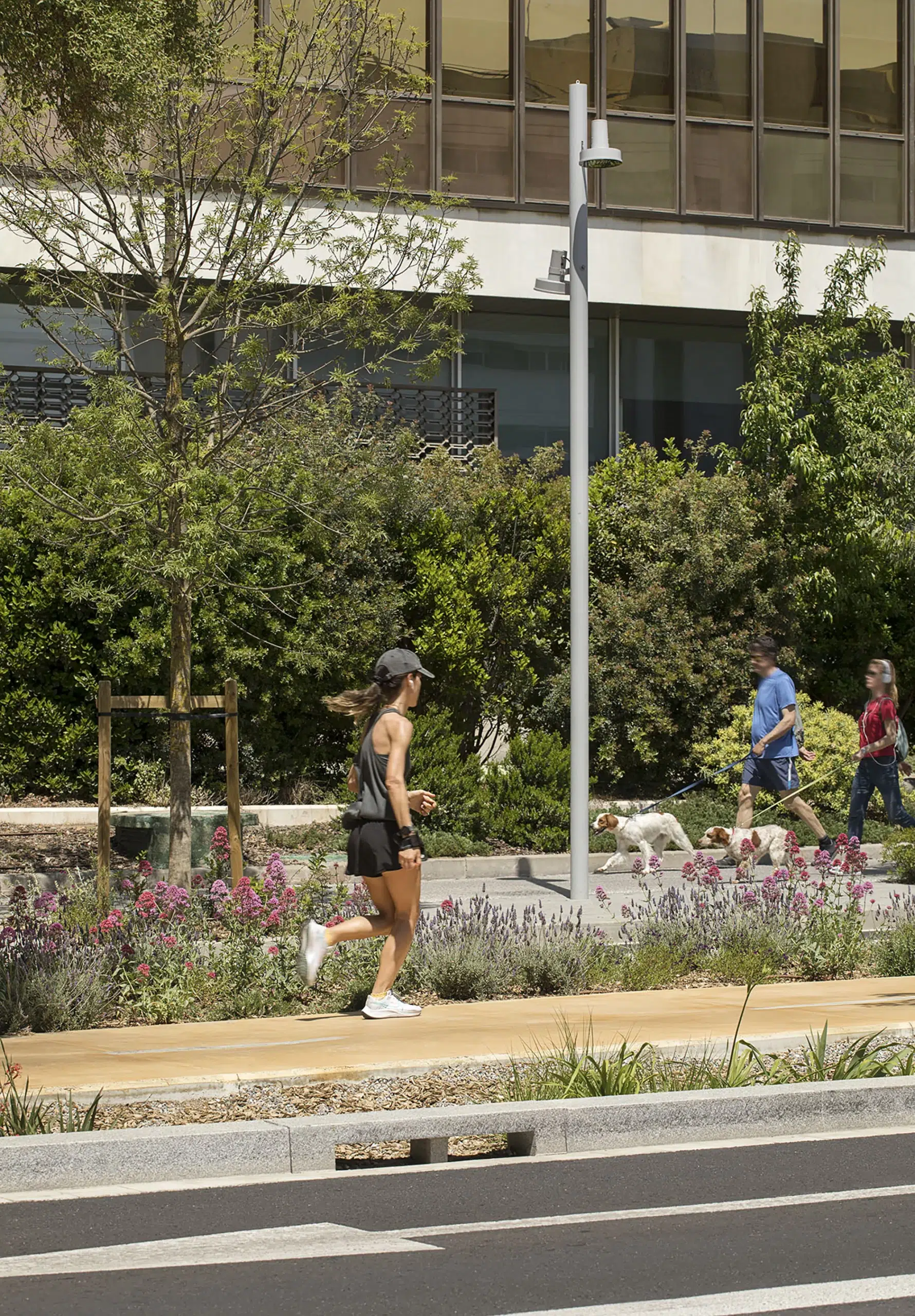
Avinguda dels Països Catalans has also been designed to support rainwater management through Sustainable Urban Drainage Systems (SUDS), which capture 100% of the roadway’s runoff.
This solution transforms the space into an area where cars are no longer the main focus, giving water a central role and respecting its natural cycle. Additionally, it helps mitigate the urban heat island effect and enhances biodiversity in the area.
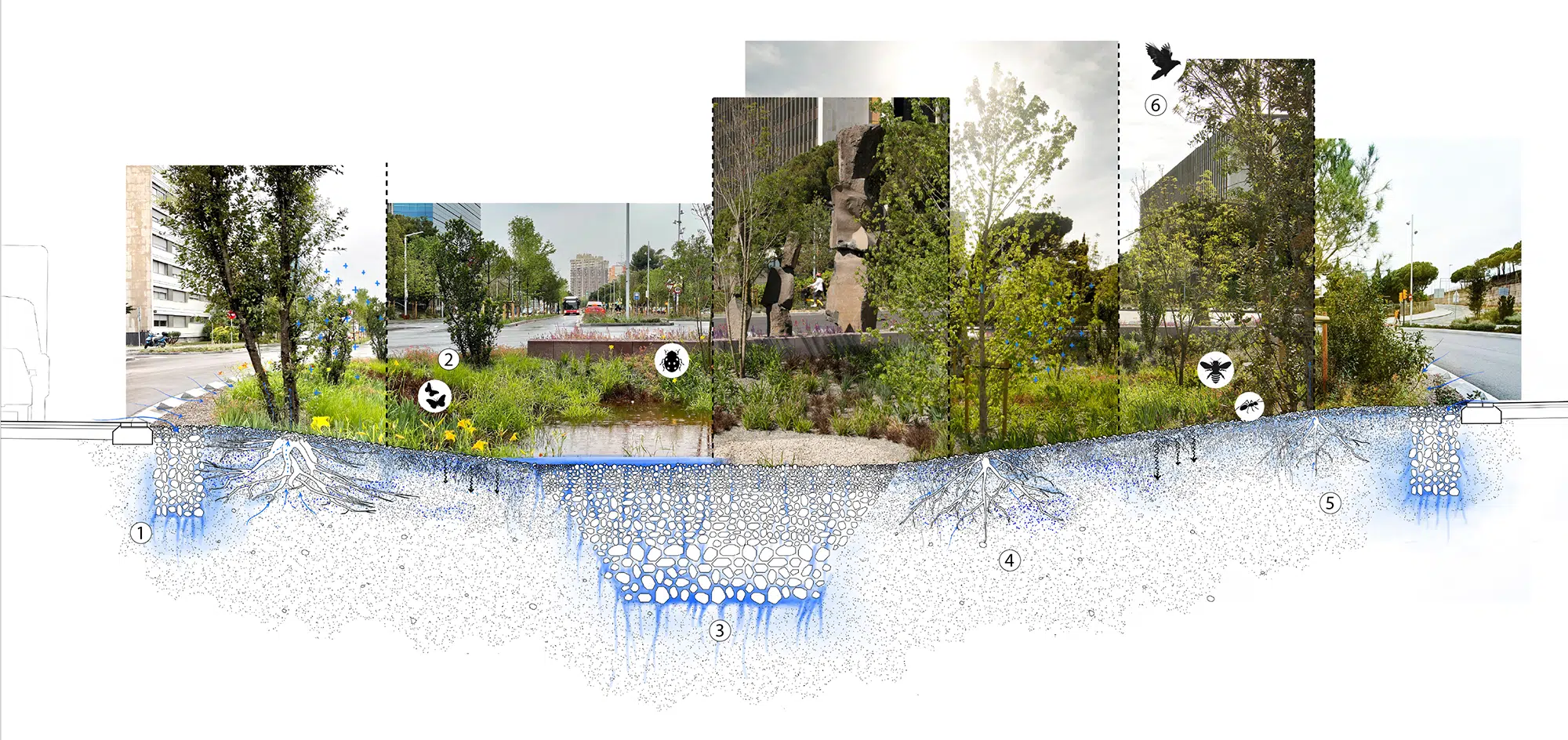
The responsible management of water in this space promotes the creation of a biodiverse environment, providing opportunities for pollinators and benefiting both plant and animal life. As a result, the square becomes a climate refuge and a sanctuary for local wildlife.
The formation of mycorrhizae boosts plant resistance to soil-borne diseases, aiding the reclamation of previously barren land. Additionally, pollinating insects reduce the need for vegetation maintenance by supporting pollination and natural pest control.
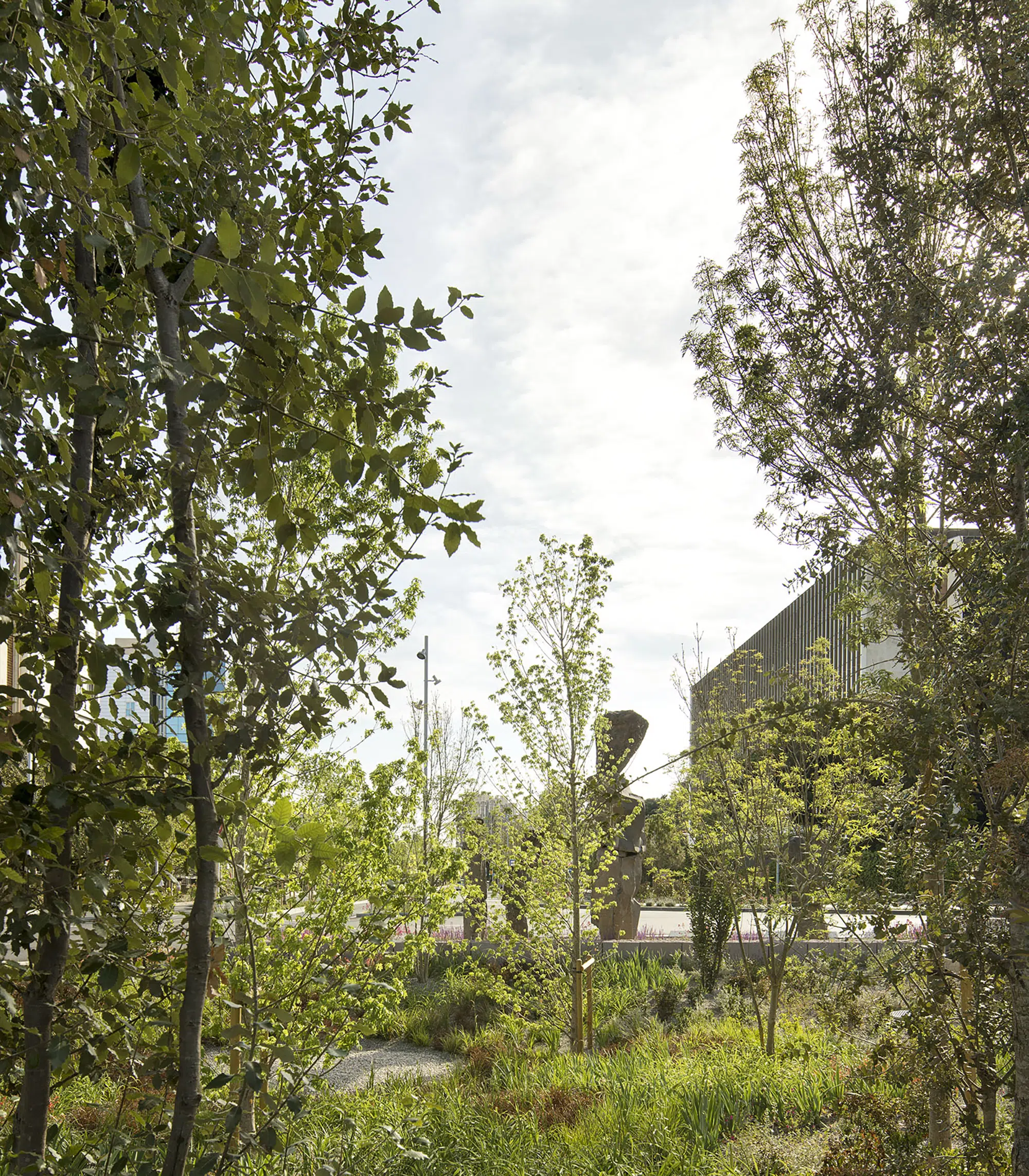
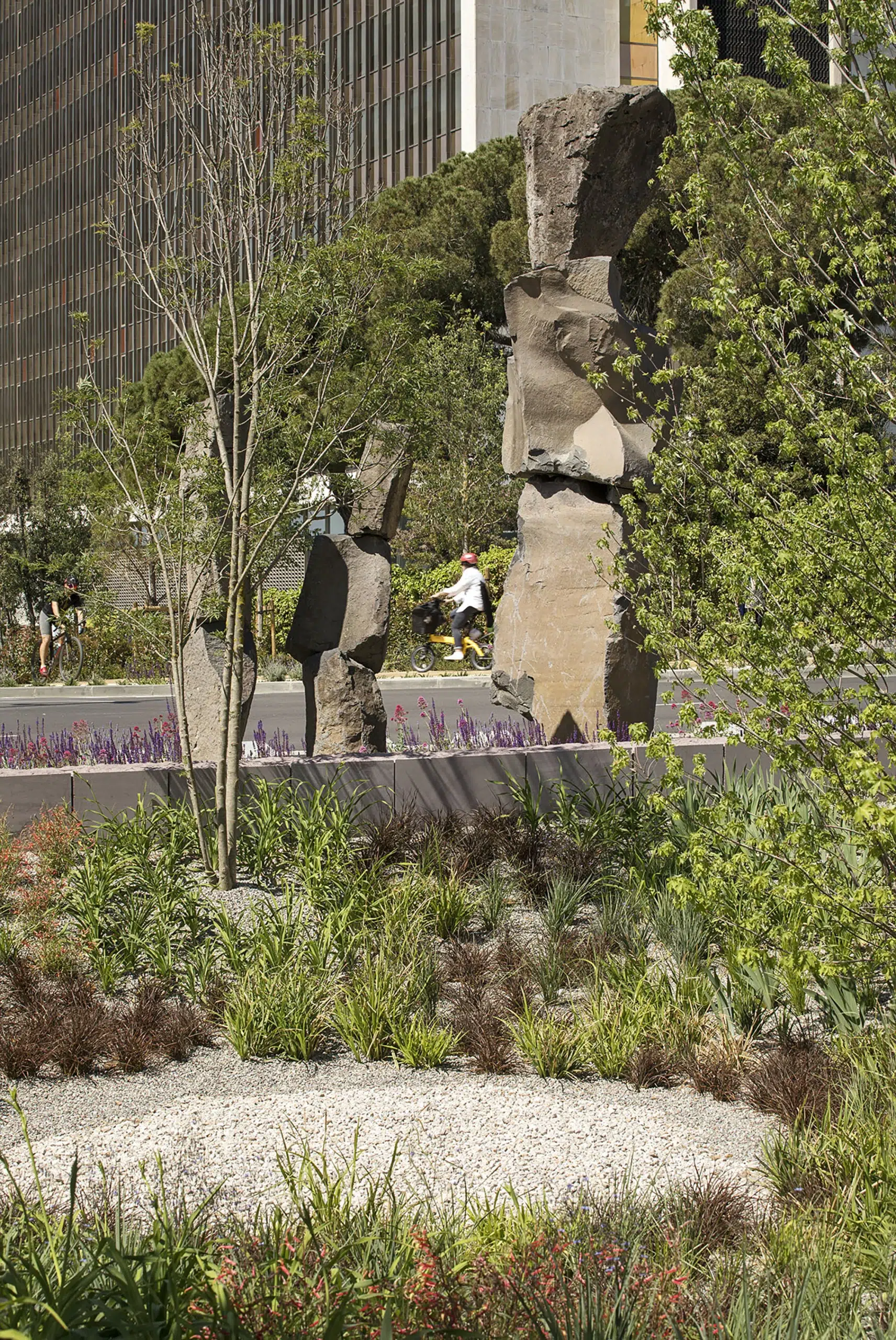
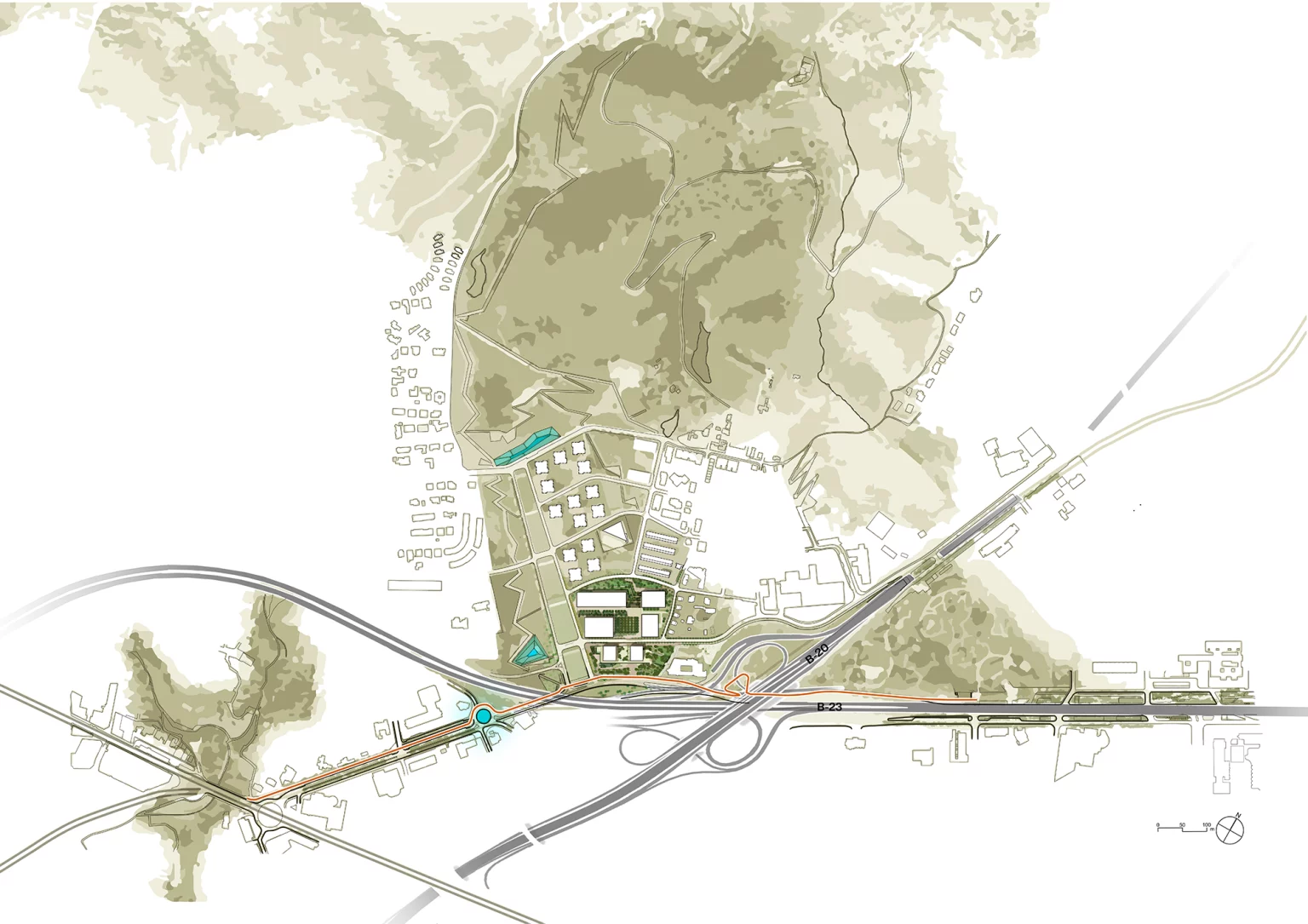
The proposal is part of the metropolitan-scale ecological and social corridor defined by the Finestrelles Master Plan in Esplugues de Llobregat, which connects Barcelona with the Baix Llobregat and, at the same time, brings the Collserola Natural Park closer to the city. The project aims to continue the expansion and strengthening of biodiversity through environmentally friendly urban development that respects both the natural environment and its surroundings. This is achieved by increasing vegetation with native and forest species and by restoring the natural water cycle within the public space.
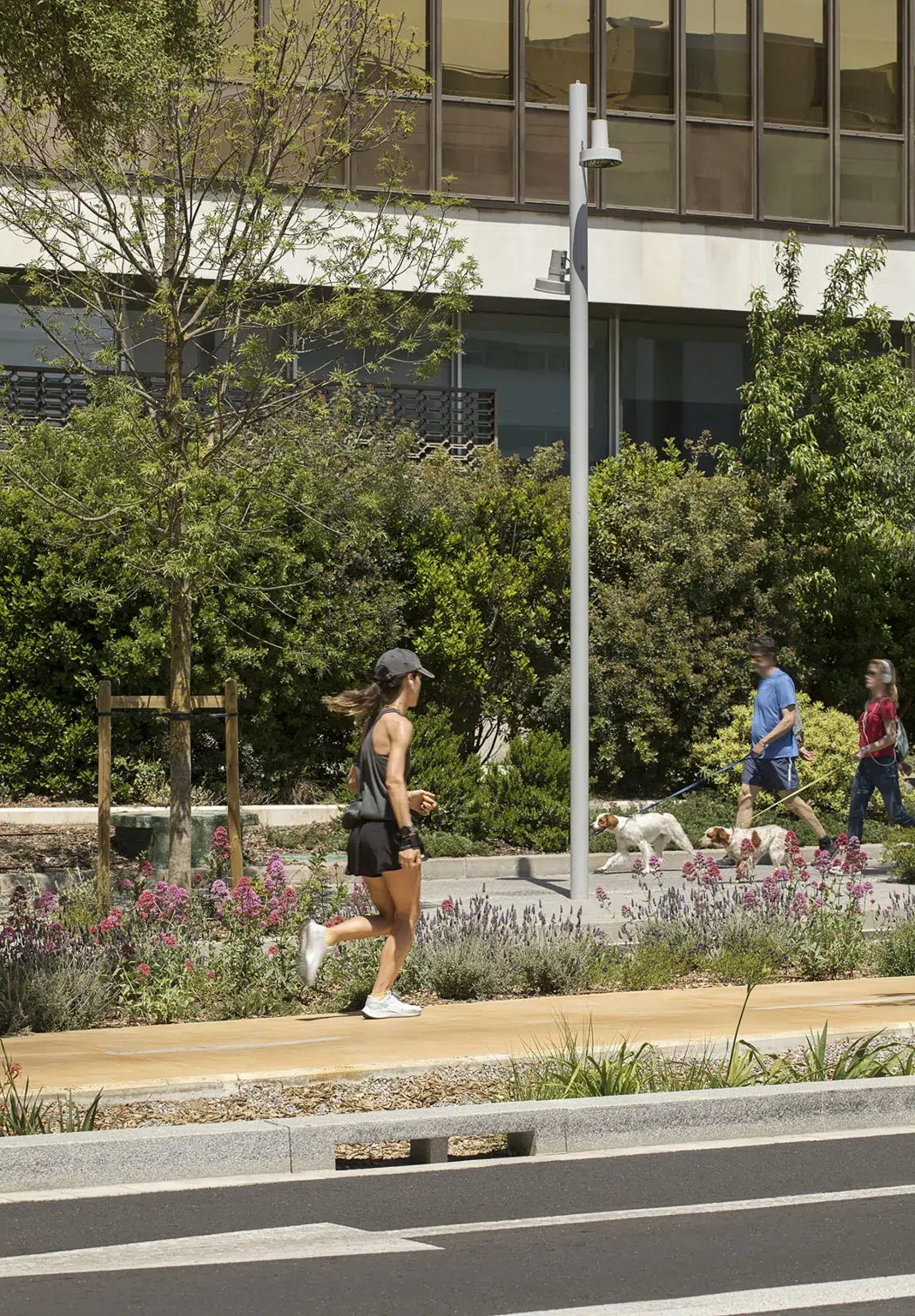
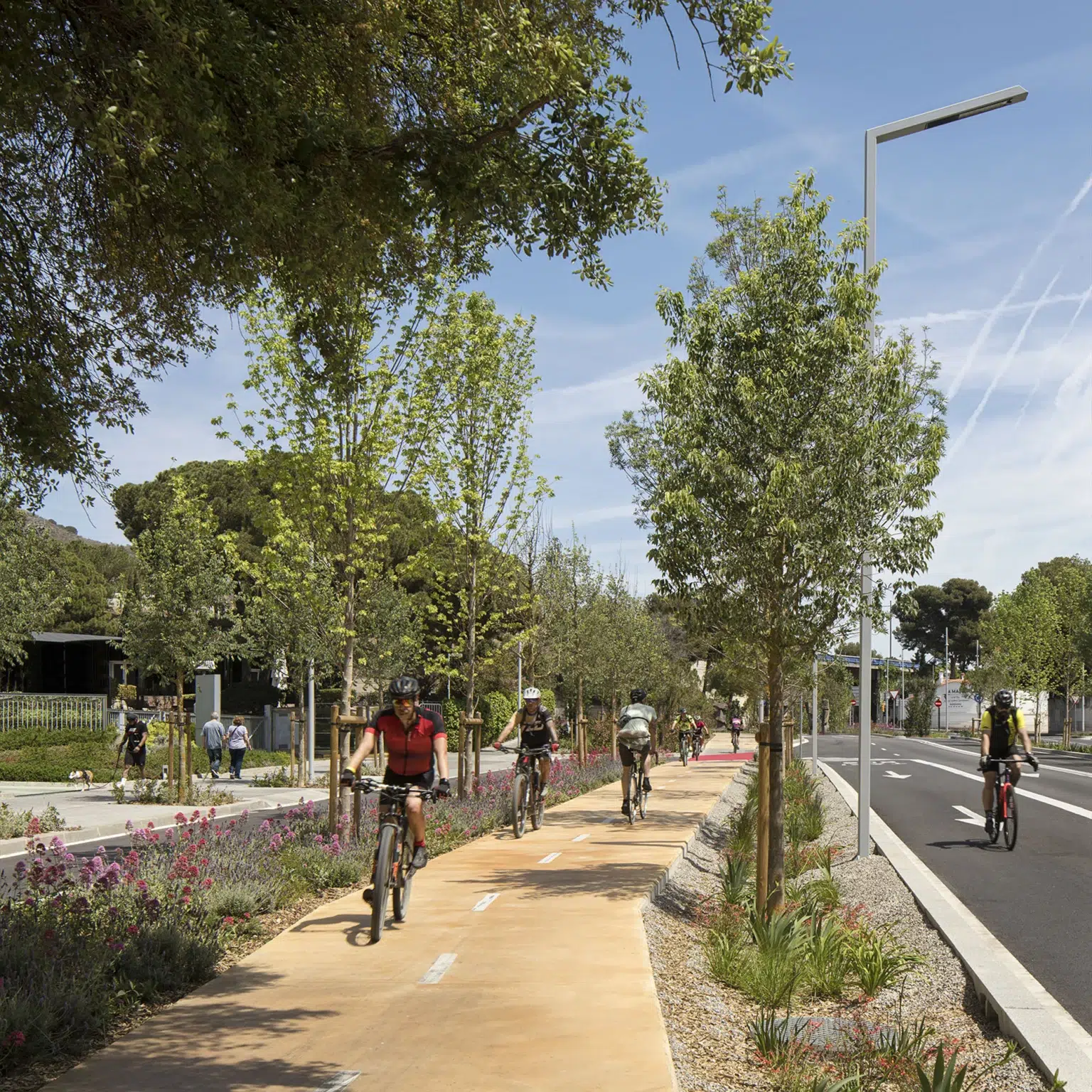
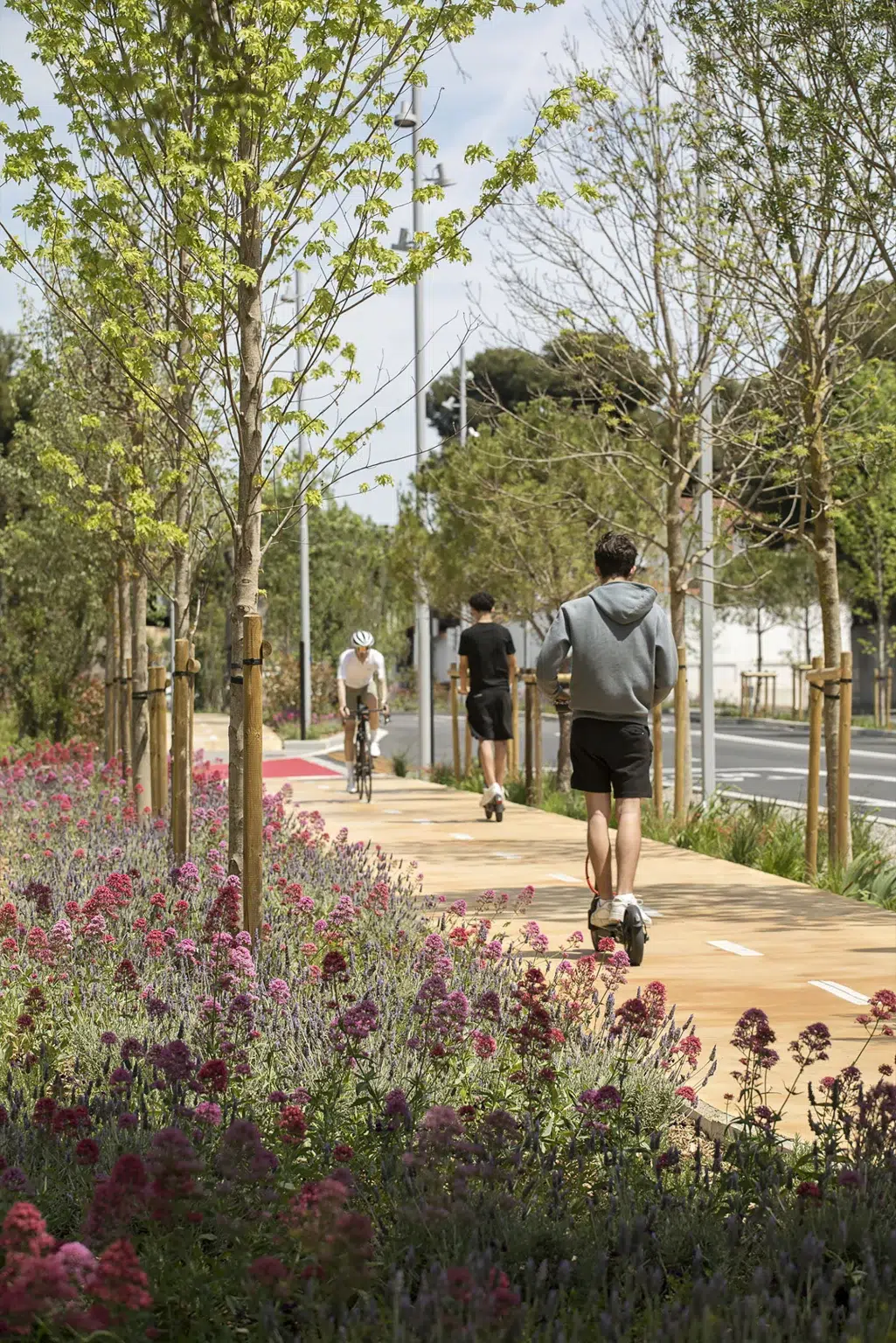
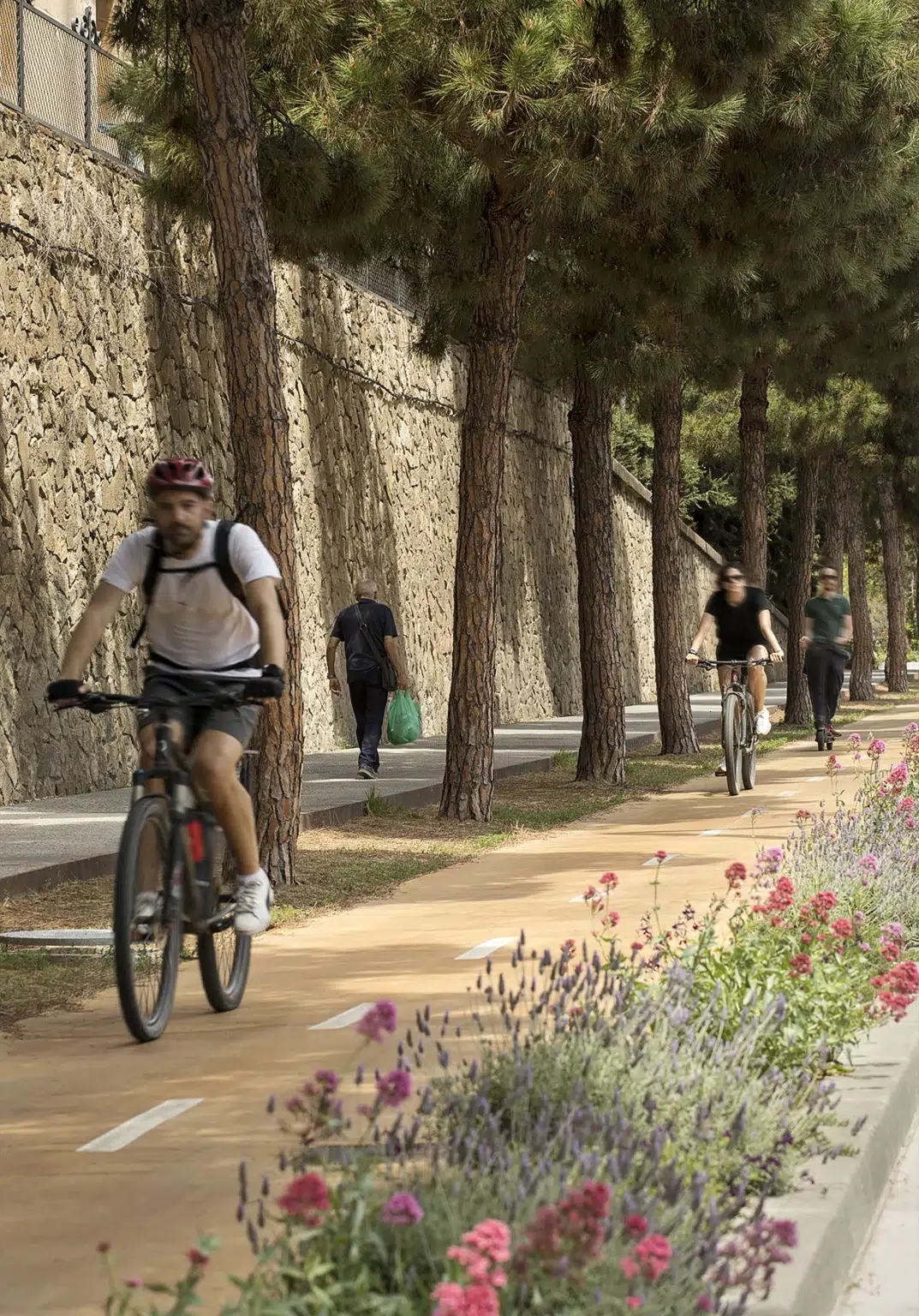
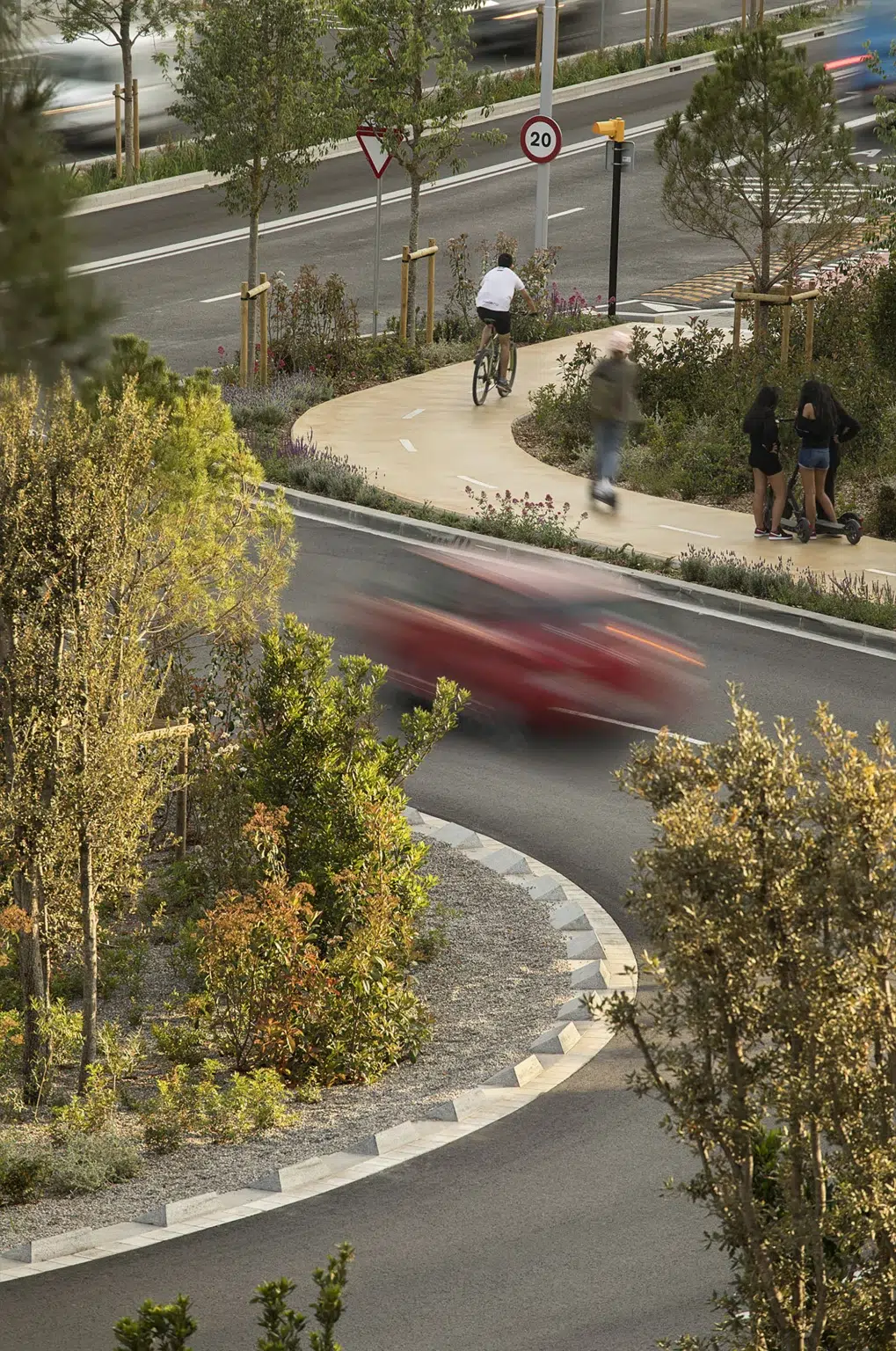
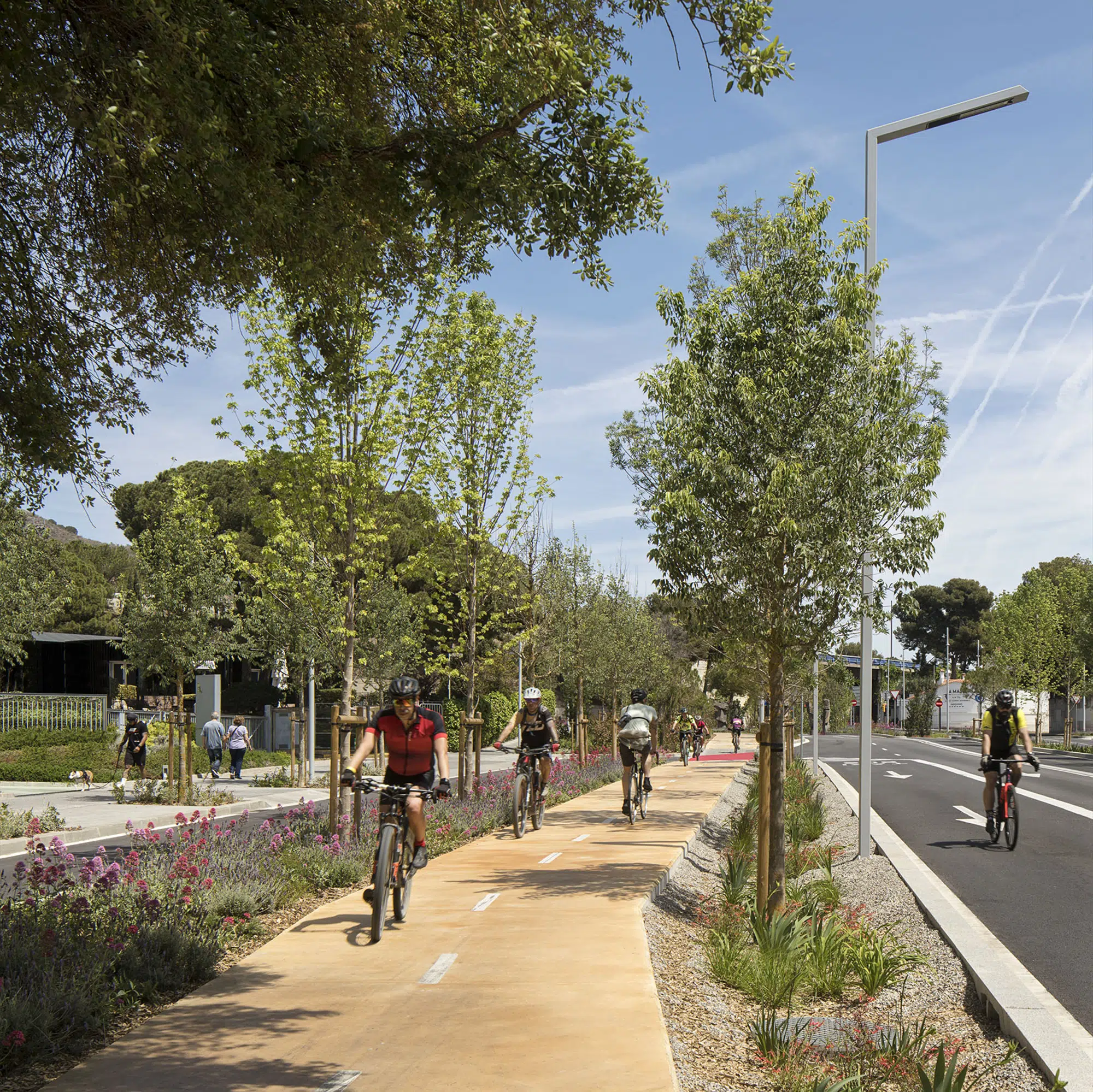
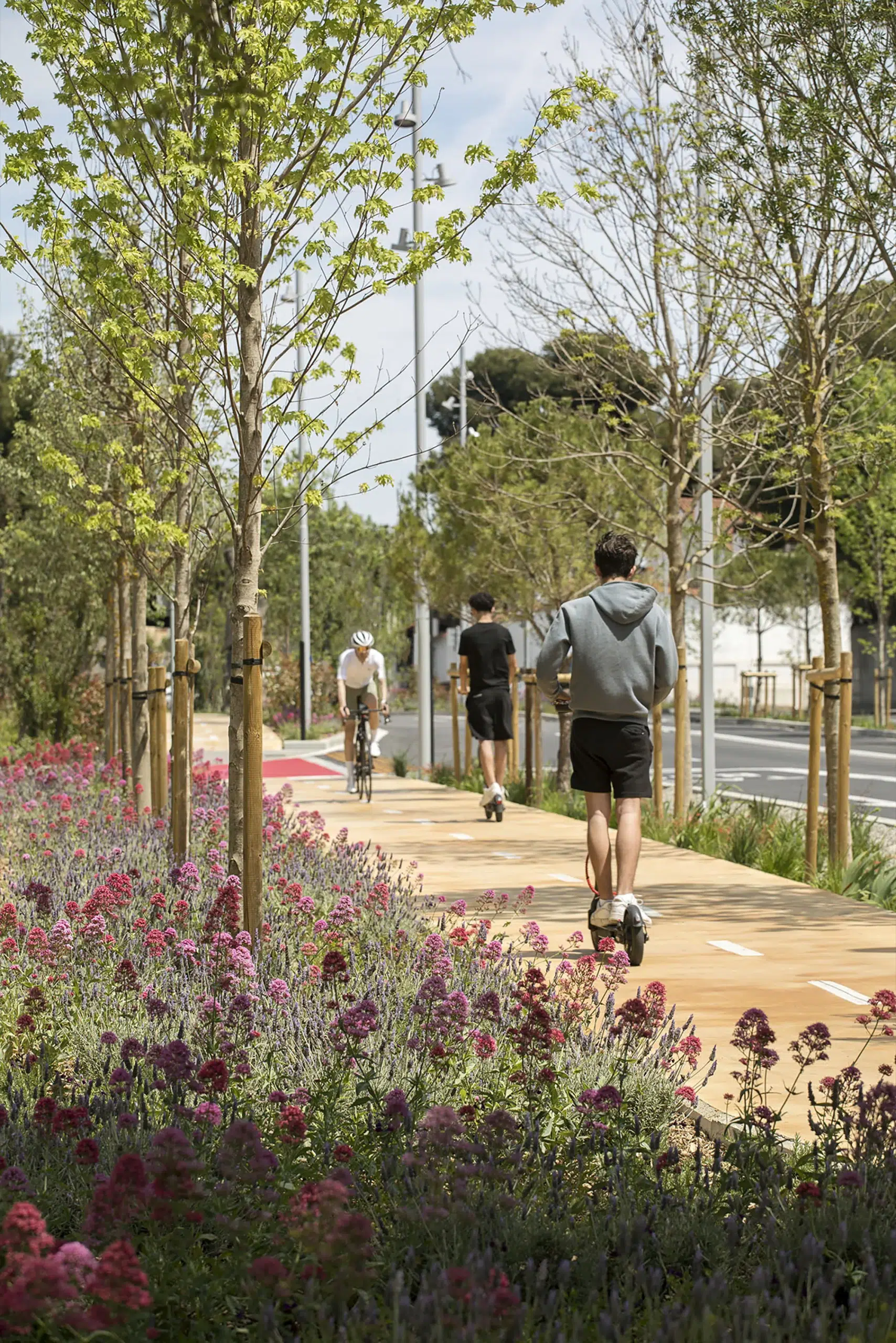
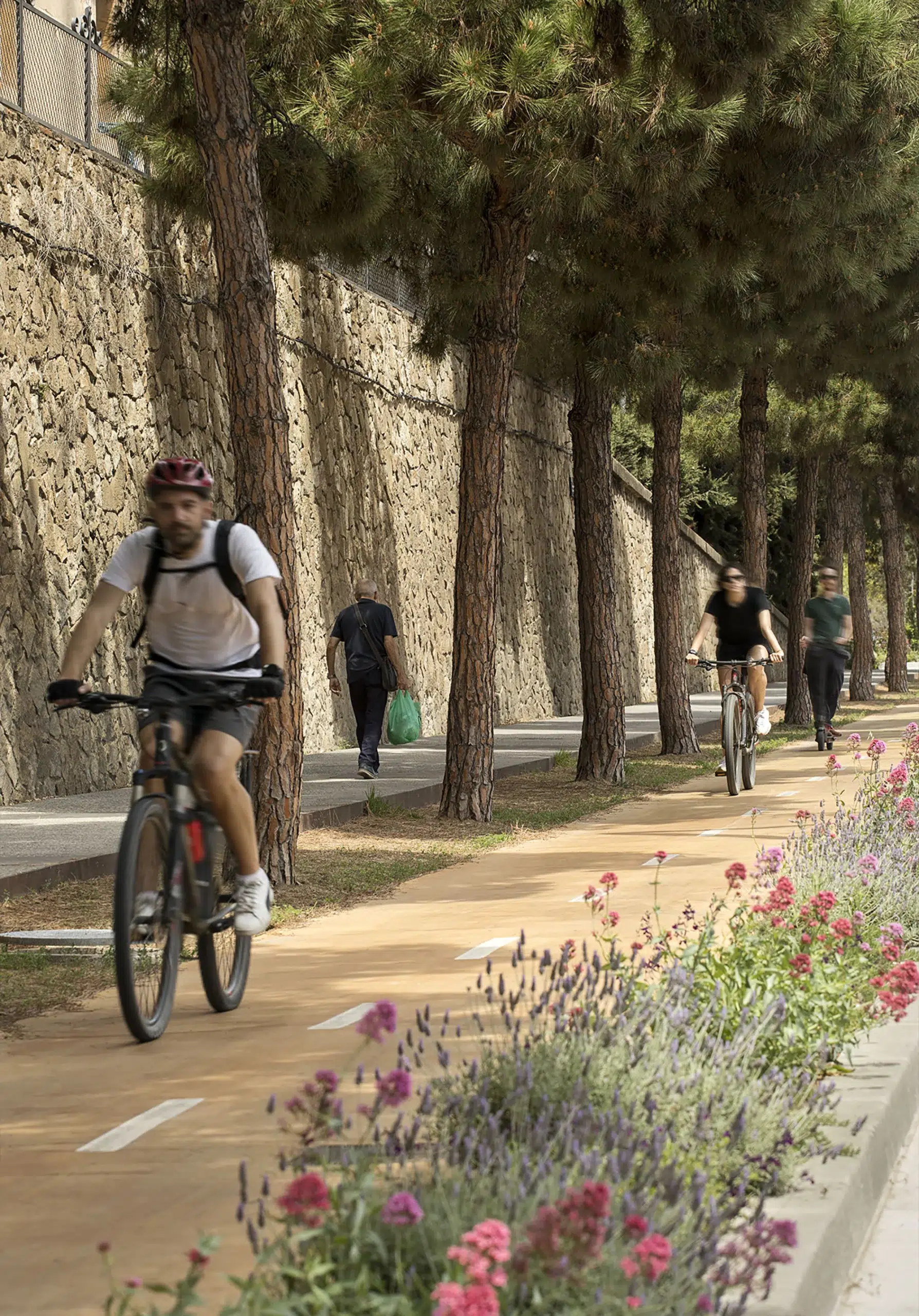
In addition, the project extends the pedestrian and cycling connection between Barcelona and Esplugues de Llobregat through the extension of Diagonal Avenue, consolidating the link to the center of Esplugues and promoting active mobility throughout the metropolitan area.
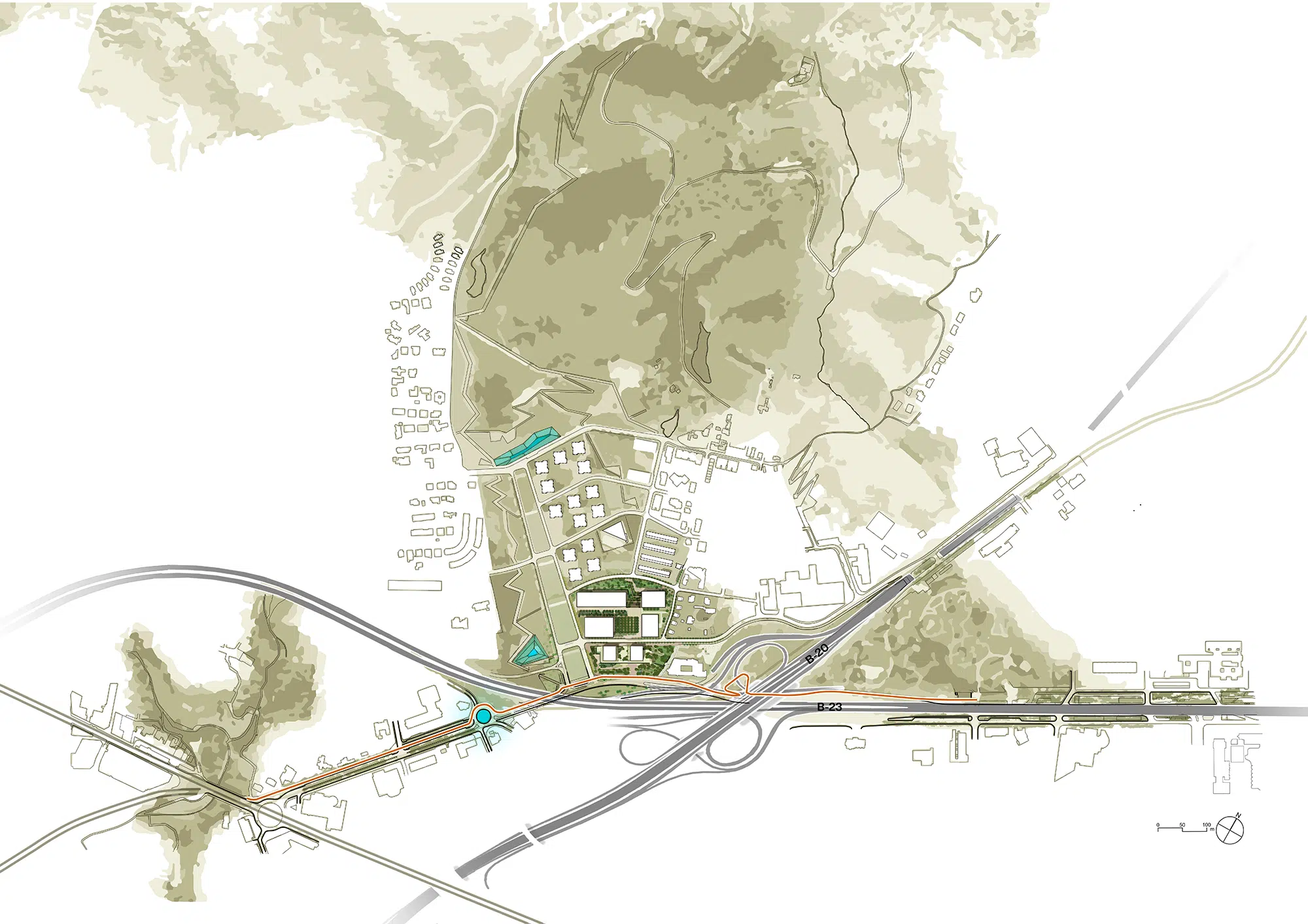
The long-standing daily congestion affecting Elisabeth Eidenbenz roundabout —one of the main entry points to Esplugues de Llobregat— along with the development of the Finestrelles area, led to the reconfiguration of this traffic node and Avenida dels Països Catalans.
At Batlleiroig, we focused on optimizing traffic flow to reduce the number of vehicles entering the square. As part of this solution, we introduced an English-style traffic system in the B23 underpass section, alleviating congestion in the square and enhancing public transport connectivity.
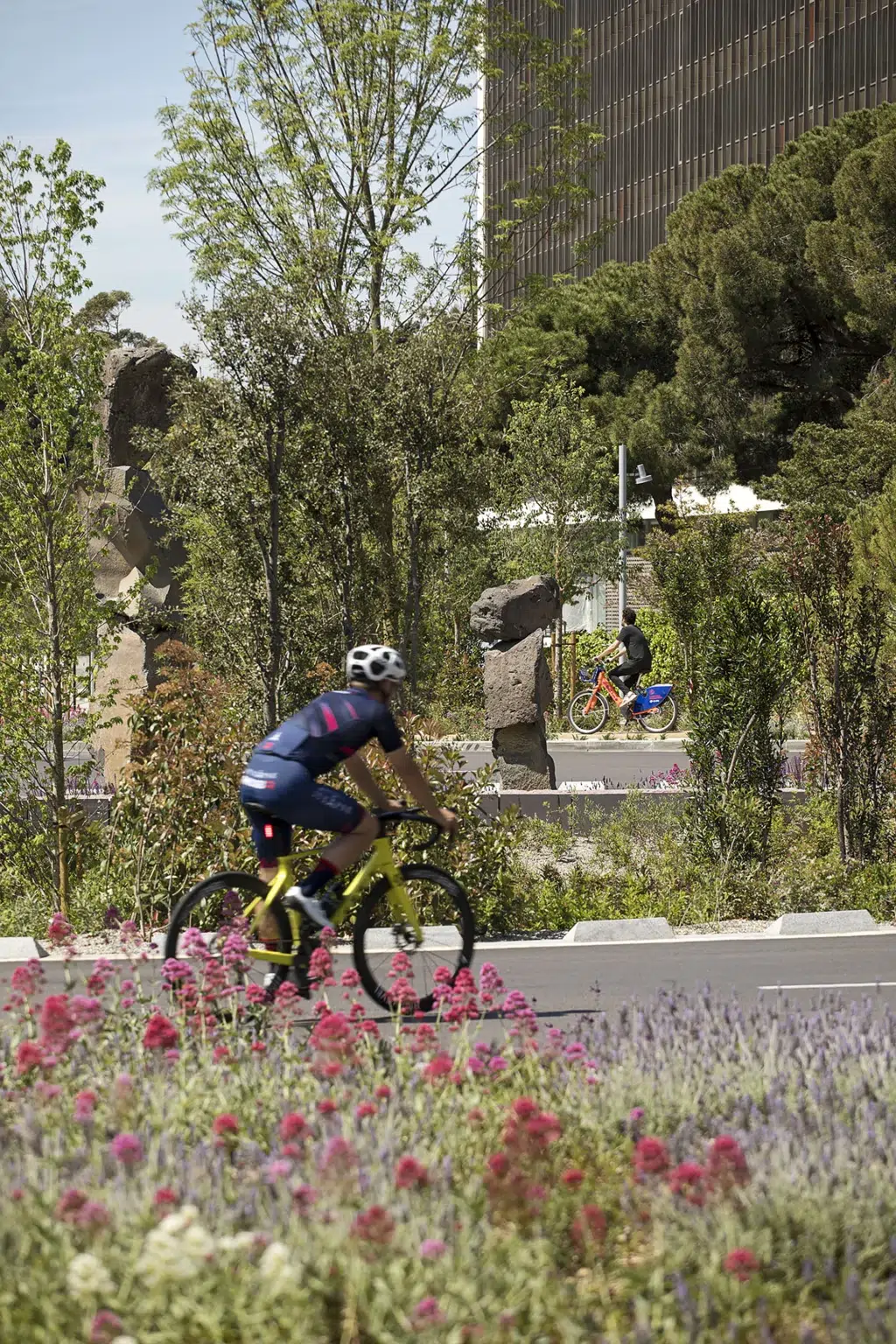
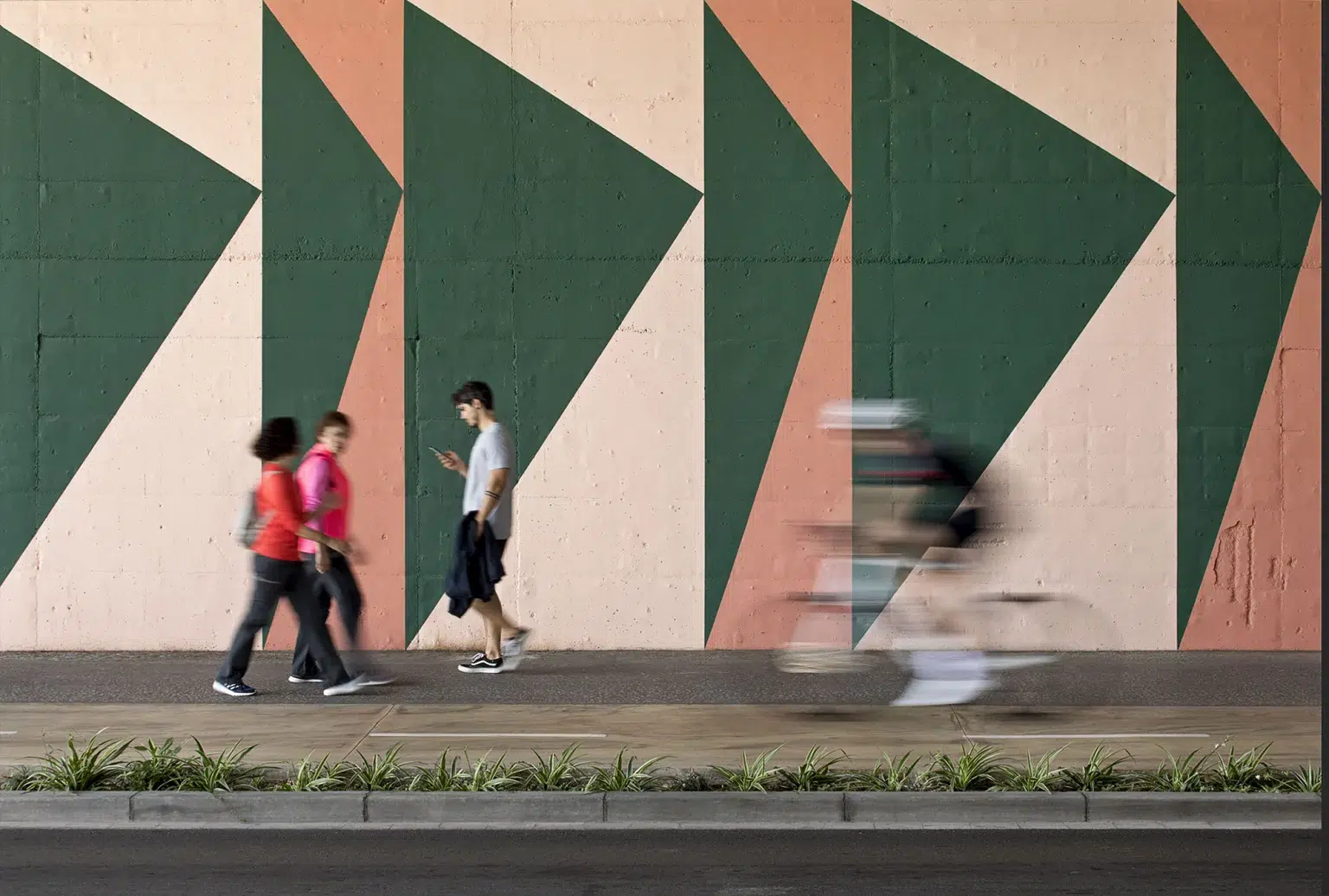
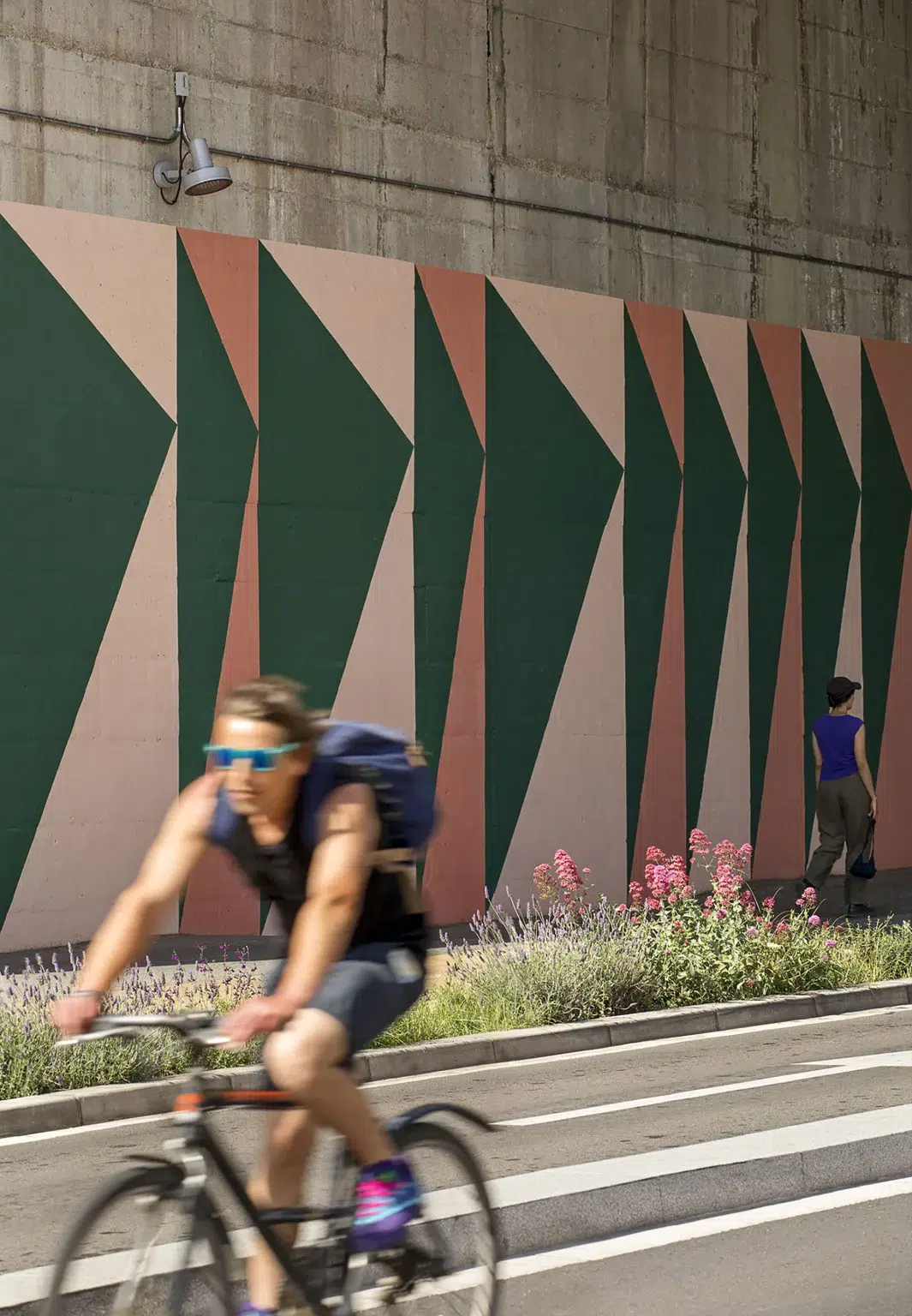
This change has significantly improved the experience for pedestrians and cyclists, who now enjoy newly designed routes that seamlessly connect to the metropolitan bike lane network.
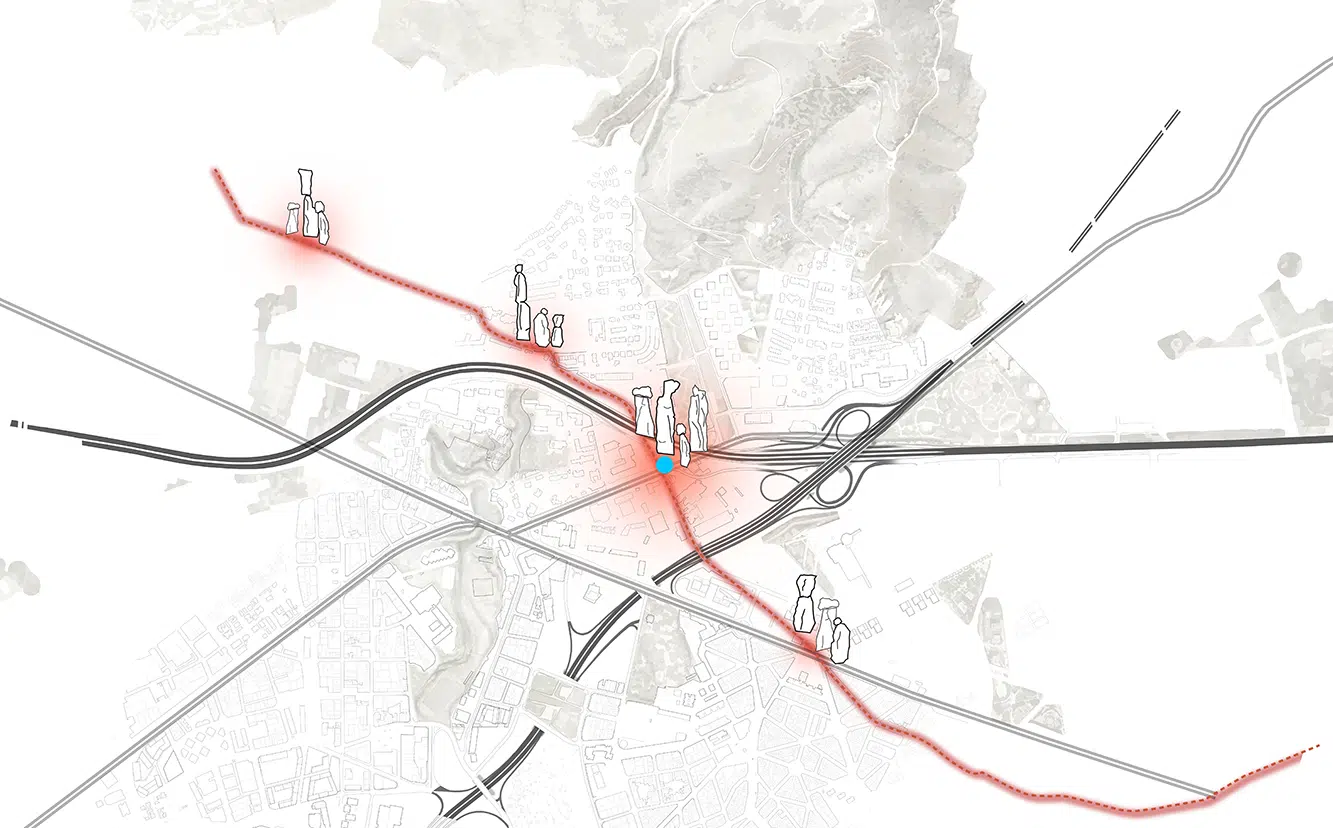
The project not only aims for a sustainable and inclusive urban transformation, but also seeks to recover and highlight the historical memory of the area, strengthening the connection between the municipality’s past and present.
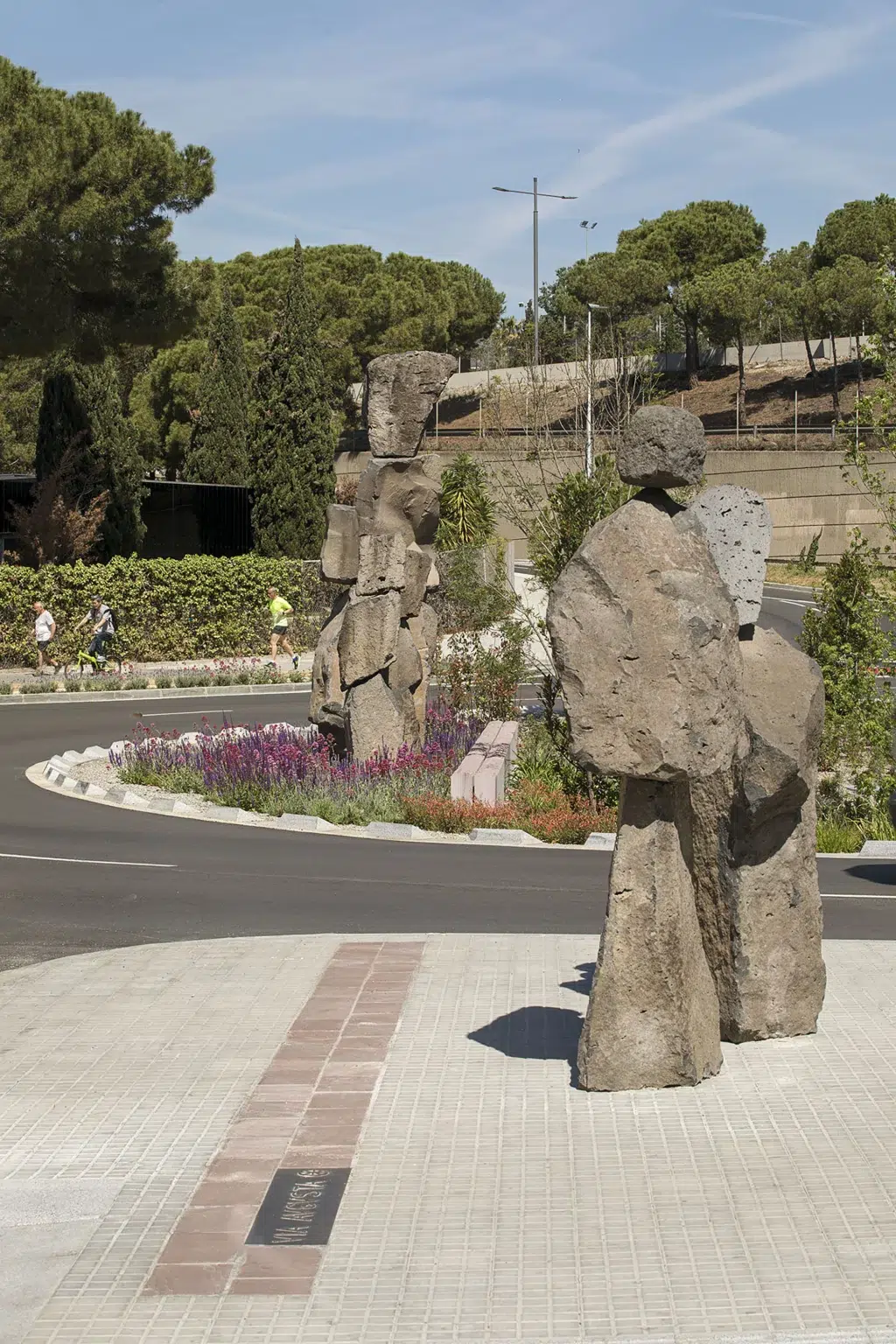
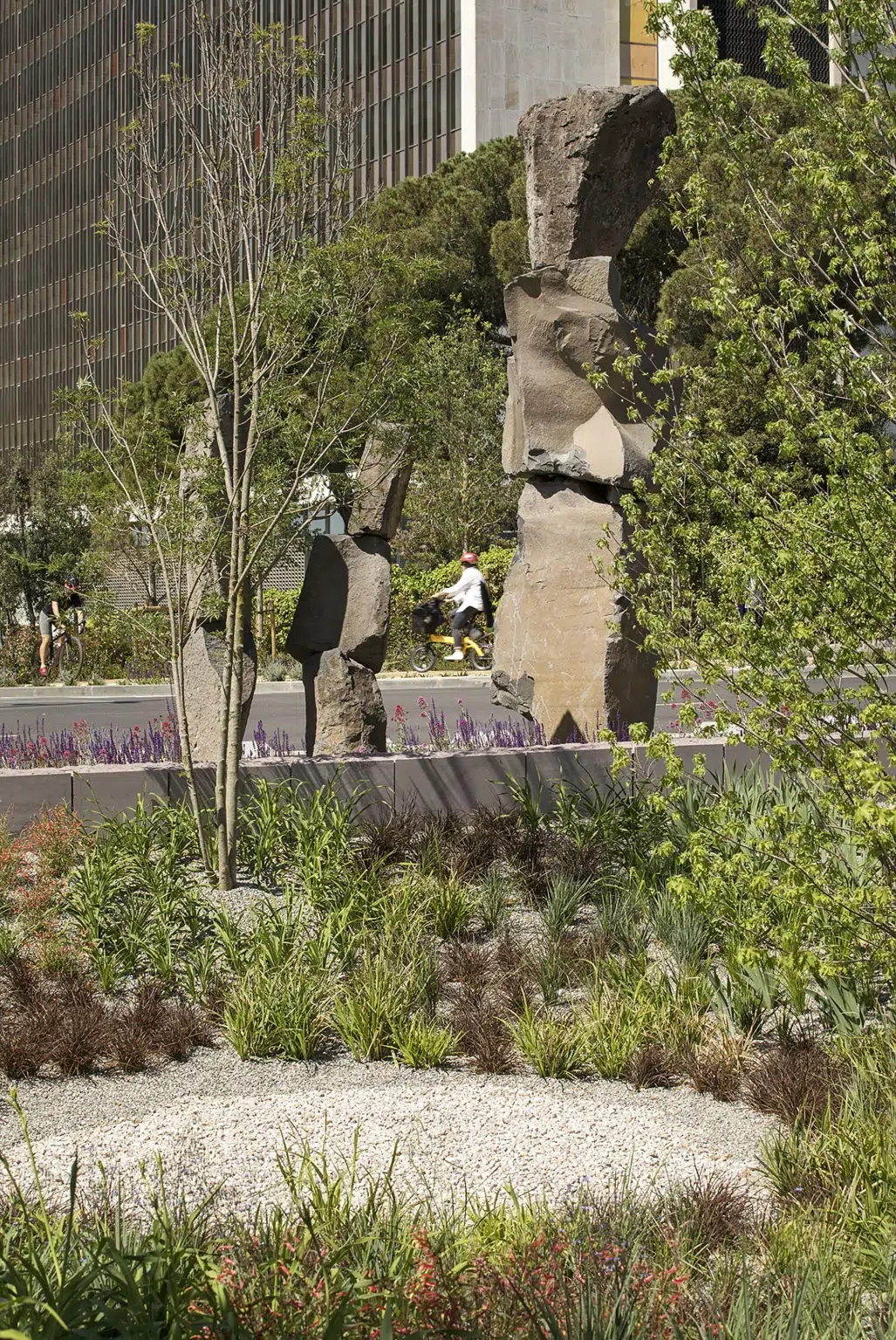
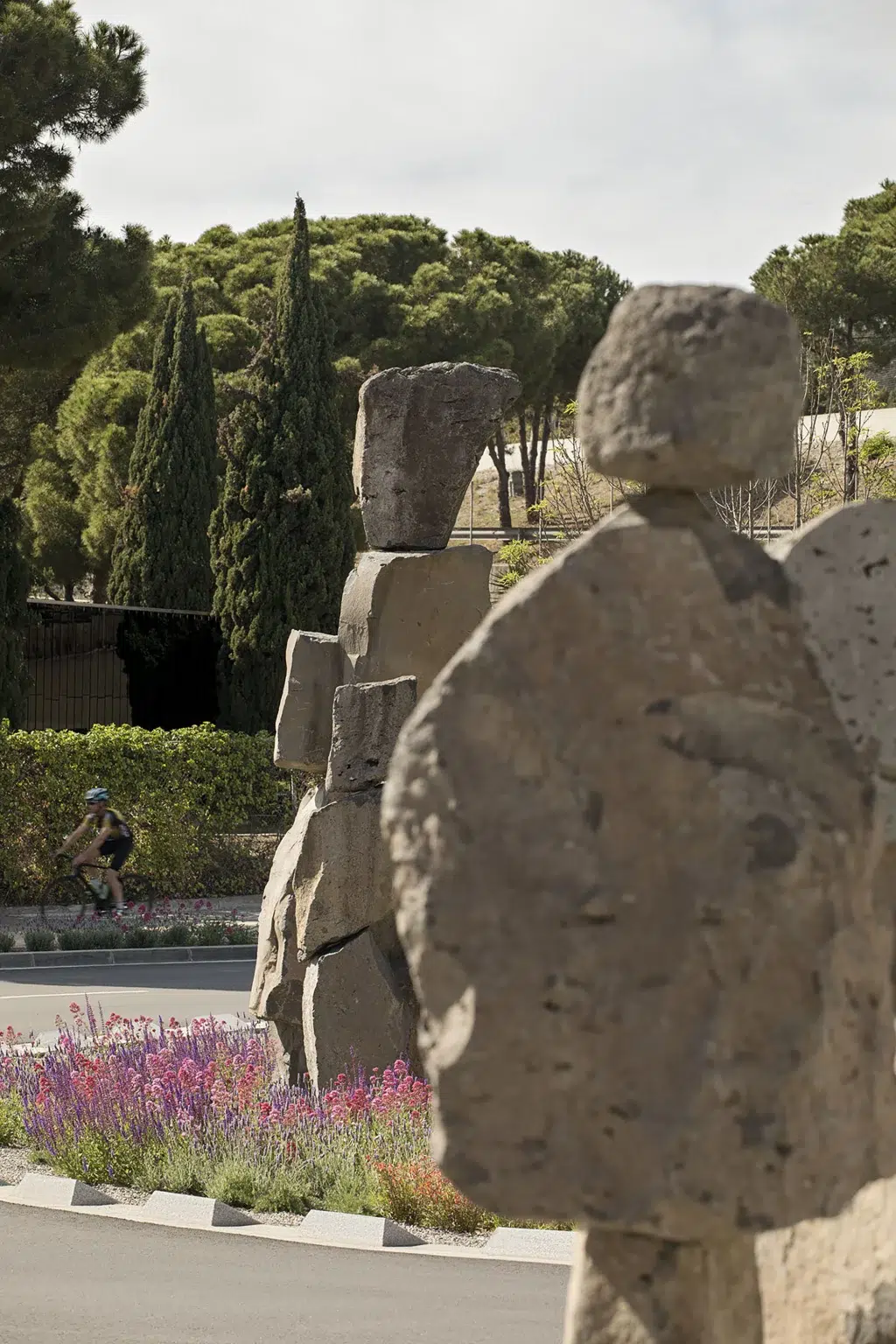
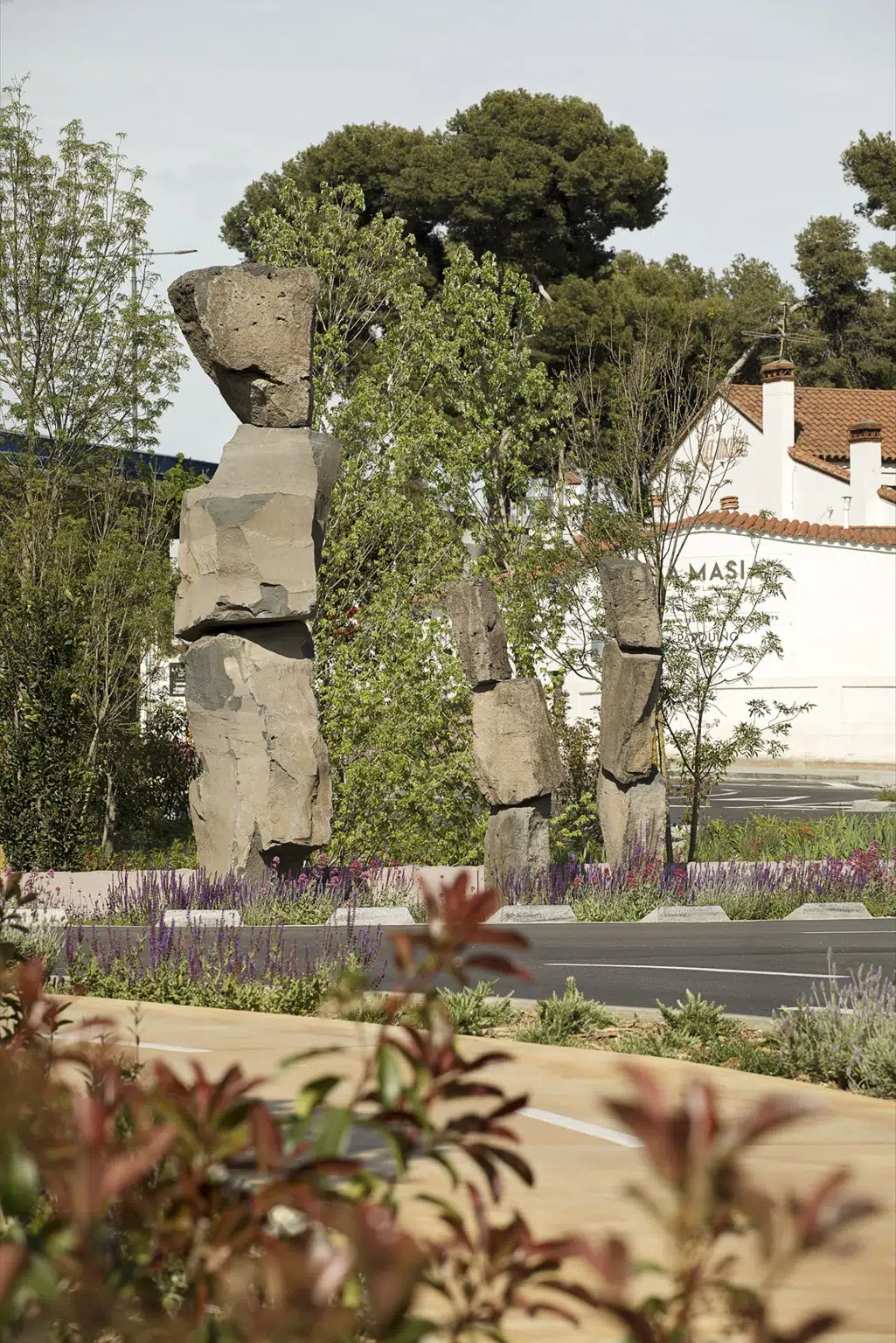
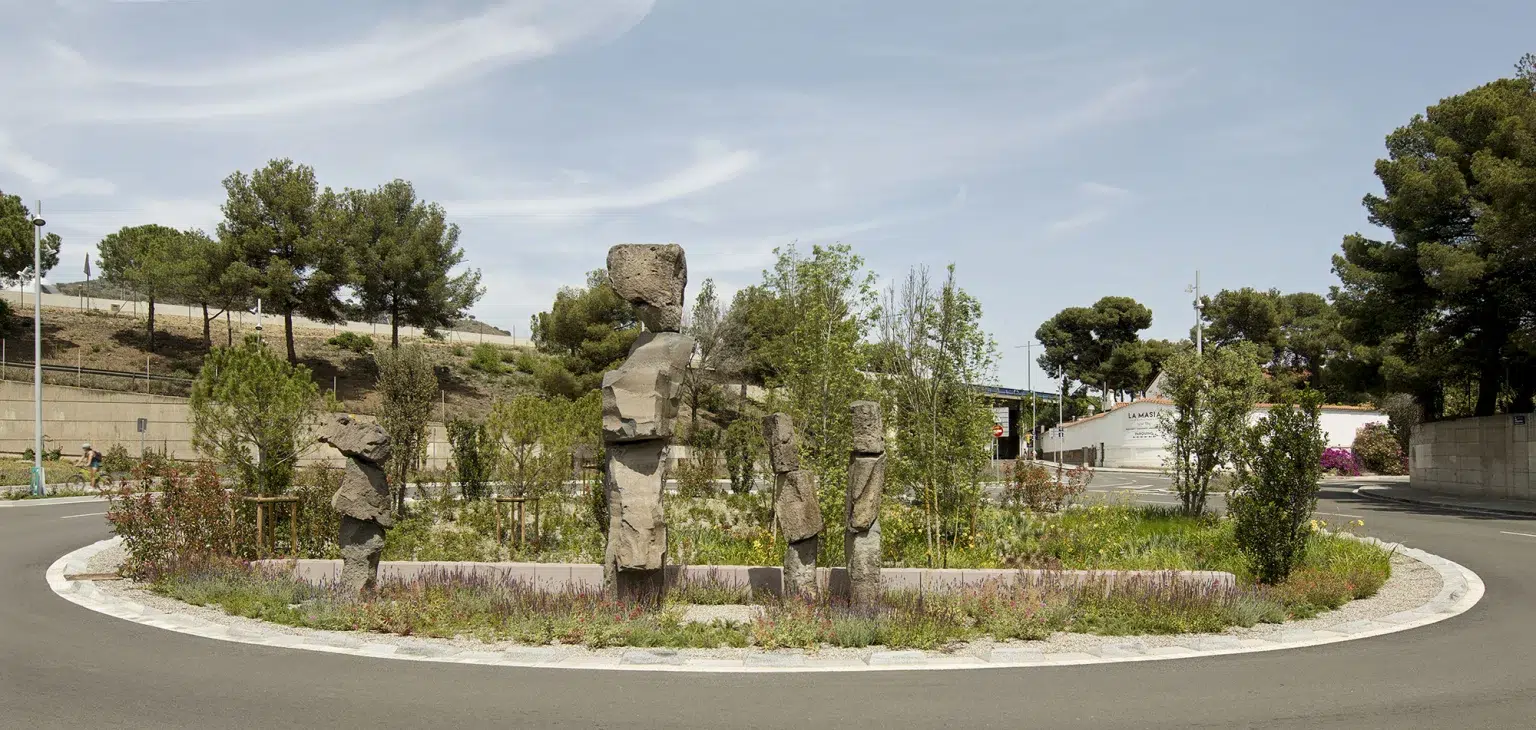
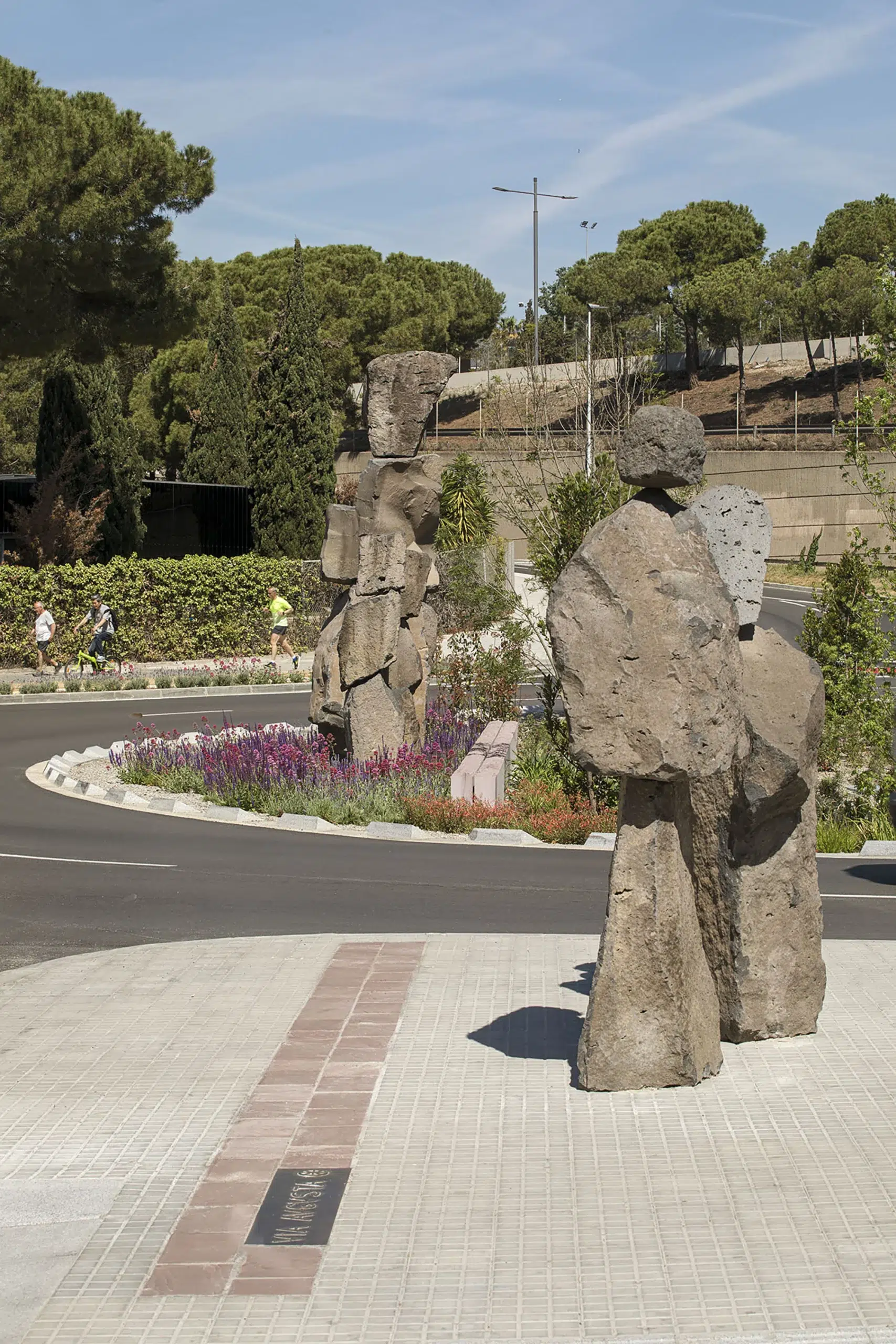
In this context, the route of the ancient Via Augusta as it passed through Esplugues de Llobregat —now vanished— is symbolically recovered through the installation of a series of sculptures that follow the path of the historic Roman road. These works, created by the sculptor Xavier Corberó, who was born and lived in Esplugues, not only enhance the urban environment but also pay tribute to the site’s cultural heritage.
The symbolic recovery of the Via Augusta restores historical memory to the public space, creating a sense of identity and belonging for the residents of Esplugues de Llobregat.
Porta Diagonal, an emblematic project underway in the Finestrelles sector
Read more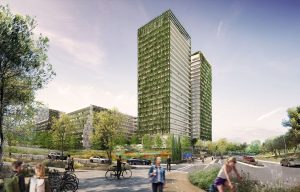
The Impluvium of Esplugues de Llobregat is a project selected for the ARCHITECTURE 2024 awards organized by the CSCAE
Read more
Joan Roig participates in the “La Ciudad Próxima” seminar within the framework of World Urbanism Day in Tenerife.
Read more